
by Rev. Mark Creech
RevMarkCreech.org
In 2023, U.S. Surgeon General Vivek Murthy warned that America is facing an “epidemic of loneliness and isolation.” Anxiety, depression, addiction, and what many researchers now call “deaths of despair” continue to rise nationwide.
What makes this especially troubling is that these problems persist in one of the wealthiest, most technologically connected, and outwardly advanced civilizations in human history. Modern society has worked tirelessly to improve itself. We have pursued education, therapy, political reform, material prosperity, self-help, endless entertainment, and unprecedented personal freedom.
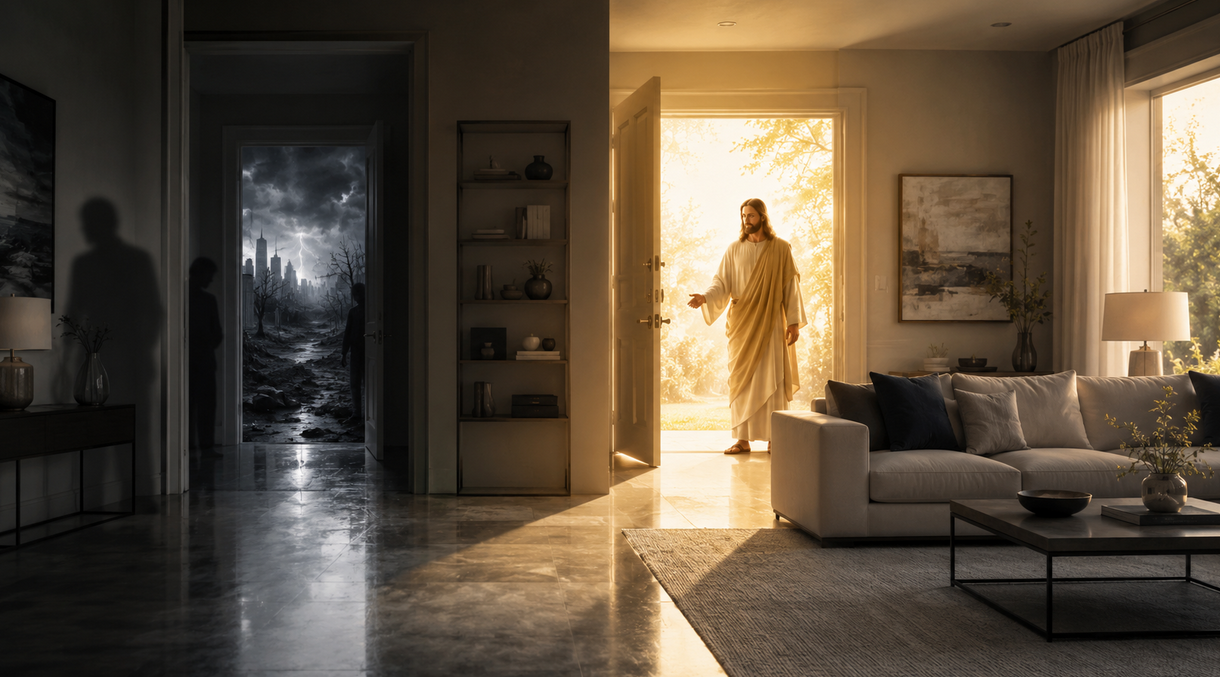
In many ways, the house has been “swept and garnished” (v. 44).
Yet millions remain profoundly empty.
Perhaps that is because human beings were never meant merely to be cleaned up on the outside. We were created to be indwelt by God Himself.
That may explain why Jesus Christ issued one of His most sobering warnings in Matthew chapter 12:
“When the unclean spirit is gone out of a man, he walketh through dry places, seeking rest, and findeth none. Then he saith, I will return into my house from whence I came out… and when he is come, he findeth it empty, swept, and garnished. Then goeth he, and taketh with himself seven other spirits more wicked than himself… and the last state of that man is worse than the first.” (Matthew 12:43-45)
Then Christ adds these chilling words:
“Even so shall it be also unto this wicked generation” (v. 45)
At first glance, the passage seems merely to describe demon possession. Certainly, our Lord believed in the literal reality of demonic powers. He rebuked them and cast them out. But His point extends far beyond the demon-possessed. Jesus is diagnosing the spiritual state of a people exposed to tremendous light yet remaining spiritually vacant.
First, the unclean spirit departs. Then the house is cleaned. It is “swept” and “garnished” (v. 44). There is visible reform. Outwardly, things appear improved and orderly. Yet the house remains empty. God Himself does not dwell there.
Because the house is empty, the evil eventually returns in an even worse form than before.
Many Bible students believe Christ was describing Israel’s condition in His own day. After the Babylonian captivity, the Jews had largely abandoned the gross idolatry that had once plagued the nation. The “house” had, in a sense, been cleaned. Israel had become deeply religious, morally disciplined, and externally ordered.
But when the Messiah Himself stood before them, the nation rejected Him.
The tragedy was not merely sin. It was spiritual emptiness beneath outward religion.
That is why Jesus warned that the latter condition would be worse than the former.
The warning remains highly relevant today.
Over time, modern Western society increasingly sought to preserve the moral benefits Christianity produced while severing itself from the God who made those blessings possible.
Years ago, the late Dr. D. James Kennedy recounted a conversation with an atheist who insisted he could live as moral a life as any Christian. Kennedy replied that he had no doubt the man could live a highly moral life. But if he did, Kennedy observed, it would largely be because he was “piggybacking” on the moral framework Christianity had already built into the surrounding culture.
For generations, Western civilization benefited from Christian assumptions about human dignity, moral accountability, compassion, forgiveness, family, truth, charity, and justice. Even many who rejected Christianity continued to live within a culture deeply shaped by Christianity.
But eventually a civilization must decide whether it will merely inherit these moral furnishings or remain rooted in the spiritual foundation that gave rise to them.
Jesus warned about a house that was “swept and garnished” (v. 44) — outwardly orderly, respectable, and improved — yet ultimately left empty.
Empty houses do not remain empty.
What increasingly rushes into the vacuum is not neutrality but confusion, despair, loneliness, spiritual disorientation, hostility toward the truth, and a growing inability to even define what it means to be human. Isn’t this what we are witnessing?
Jesus warned that rejected light produces an even deeper darkness.
That was the tragedy of His own generation. The people of Nineveh repented in response to Jonah’s preaching, and the Queen of Sheba traveled a great distance to hear Solomon’s wisdom. Yet the men standing before Christ had witnessed mightier miracles and heard divine truth from the lips of the Son of God Himself, and they still hardened their hearts.
Greater light brings greater accountability.
The issue was not ignorance but rejection and unbelief.

This is what makes America’s condition especially dangerous. We are not merely a pagan nation unfamiliar with Christianity. We are a nation that has been richly exposed to biblical truth yet increasingly turns away from it knowingly.
The same danger exists at the personal level.
A man may clean up his outward life. He may abandon destructive habits, improve his manners, restore his image, and pursue moral reform. But morality alone cannot save the soul. If the heart remains spiritually empty — if Christ is not received – if Christ Himself does not reign in the heart — the emptiness itself becomes dangerous.
Human beings were not designed merely to expel darkness. We were created to be inhabited by the Spirit of God.
This is why Jesus elsewhere declared:
“He that is not with me is against me.” (Matthew 12:30)
There is no neutrality in spiritual matters. A civilization, a church, or a soul will ultimately be inhabited by something.
This seems to be the great crisis of our age. We have tried to preserve the appearance of order while removing the One who alone puts our souls in order – the One who gives abundant life – eternal life.
Again, the house cannot remain empty.
The answer is not mere political reform, moral outrage, or cultural nostalgia. Necessary as some reforms may be, the deeper need is spiritual renewal — hearts surrendered to Christ, homes governed by the truths of God’s Word, churches filled with conviction and compassion, and a people once again willing to humble themselves before God.
When Christ fills the house, darkness loses its dominion.
This is the great hope for every person and every nation.