
by Rev. Mark Creech, D.H.L.
RevMarkCreech.org
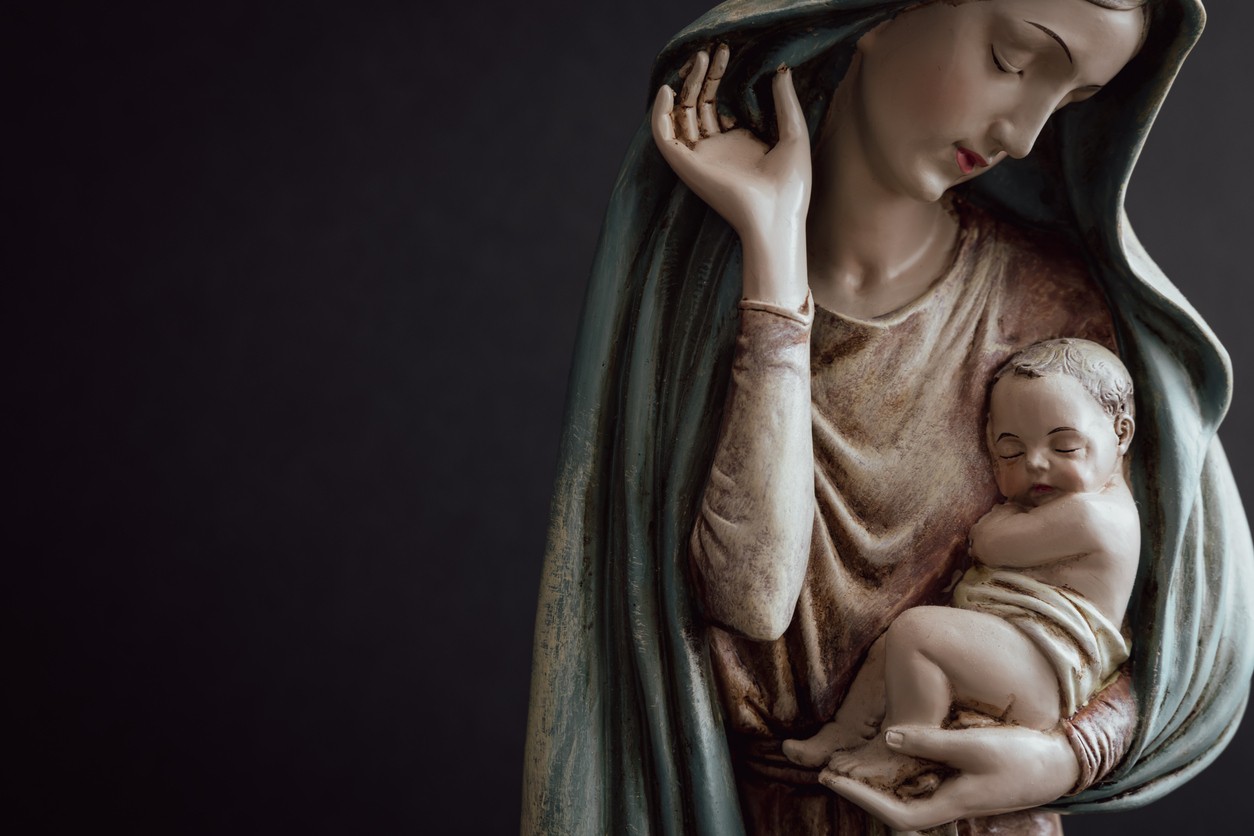
Mary, the mother of our Lord, occupies a complicated place in today’s world. In some Christian traditions, especially Roman Catholicism, she is elevated beyond what Scripture supports. Protestants, reacting to such excess, often go too far the other way – affirming her role but rarely dwelling on the remarkable faith and courage she demonstrated. Secular and pop culture further reduce her, turning her into a seasonal decoration, a sentimental symbol, or a stylized icon stripped of theological weight.
But Scripture gives us a far richer portrait. Mary was not a fragile figurine in a nativity tableau; she was an actual young woman awakened to the staggering light and responsibility of divine revelation.
Mary deserves neither exaggerated veneration nor casual neglect. She deserves careful reflection, for in her life we see how God forms His servants through mystery, interruption, and humble faith.
From her example emerge seven timeless truths that continue to speak with clarity and strength to the Church today.
God’s Purposes Can Be Disruptive, But Surrender is the Right Response
Mary entered life expecting the ordinary path of any young Jewish woman: a betrothal, a marriage, a home in Nazareth, and the quiet rhythms of village life. But nothing about her calling allowed for normalcy. From the moment the angel Gabriel appeared, her future was swept up into a divine direction that overturned all of her expectations. She would conceive before marriage, by the Holy Spirit, as a virgin, and she would also live under the shadow of what would be perceived as scandal. The life she had imagined entirely vanished, but surrender to God was the right response.
However, the disruptions she experienced didn’t end there. Instead of giving birth surrounded by family, she traveled to Bethlehem and delivered her Son in a filthy, smelly stable. Instead of settling into peaceful domestic life, she fled to Egypt as a refugee. Instead of the ordinary and relatively quiet life, she carried the profound weight of prophetic mystery. Then there was Simeon’s foretelling that one day a sword would pierce her own soul. As Jesus grew, His public ministry took Him far from home and into the heat of a hotbed of controversy; Mary had to surrender her maternal hopes to God’s higher purposes. At Calvary, she faced a mother’s sorrow that defies language and stretches beyond the reach of tears. Still, unbeknownst to her, Mary’s sorrows lay at the very center of the world’s redemption.
It is not difficult to imagine how, at times, she must have longed for the simplicity of everyday life. Yet service to God often entails the high cost of sacrifice, and Mary bore it with a quiet, steady trust. God’s larger story repeatedly overtook her expectations, and in her surrender, we see the beauty of a faith shaped by God’s sovereign hand.
God Often Chooses the Young to Accomplish What the Old Believe Impossible
Mary was very likely a teenager, young, inexperienced, and still forming her understanding of the world. Yet God placed upon her shoulders a calling as old as creation itself and the great promise made after humanity’s fall. She would bear the Messiah, the Son of the Most-High. By the world’s standards, she definitely didn’t have the credentials expected, not the age, not the influence, not the training, not the status. But she had something far rarer: a heart willing to believe God simply because He had spoken.
Her story reminds us that spiritual maturity is not necessarily measured by years but by responsiveness to God. Scripture is full of such patterns. God called Samuel when he was still a boy, sleeping near the ark; Eli, aged and experienced, could barely recognize the voice the child Samuel was hearing so clearly. David was an overlooked shepherd youth when God anointed him king, even as his older brothers were passed over. Josiah was only eight years old when he began to reign in Judah, yet his heart turned more fully toward God than many kings before him – kings who had decades of experience behind them. In the New Testament, Paul exhorted young Timothy not to let anyone despise his youth, because faithfulness, not age, is the accurate measure of a faithful servant of God.
Years alone do not produce spiritual wisdom, nor does youth always disqualify it. Here’s a warning worth considering: The longer we live, the easier it becomes to allow caution, sorrow, disappointment, or cynicism to dull our readiness to believe and act on what God has revealed. Mary’s youth did not hinder her; it freed her.
Mary received the angel’s announcement not with hardened skepticism, as those seasoned by life are often tempted to do. Instead, Mary responded with the trusting openness of someone whose heart hadn’t yet learned to doubt the power and possibilities with God.
Submission to God May Invite Lifelong Misunderstanding and Suspicion
From the moment the angel Gabriel appeared, Mary understood what the price of obedience might cost her. A virgin betrothed, but not yet married, found to be pregnant: such news would undoubtedly provoke whispers, raised brows, and quiet conversations behind closed doors. She knew this.
The angel didn’t promise her an easy path; he simply declared God’s will. Nonetheless, Mary, pure in heart and exemplary in devotion, accepted the divine calling, essentially saying, “Yes, Lord, whatever you say I will do” (Luke 1:38). She was fully aware that her reputation might never recover in her neighbors’ eyes.
This suspicion wasn’t limited to Nazareth either. It followed her for years. Even during Jesus’ adult ministry, the stain of the rumor mill still clung to her. When Jesus declared God as His Father, His opponents responded with a cruel insinuation: “We were not born of fornication,” (John 8:41) they cried. Their words were a deliberate slur, a pointed accusation meant to discredit Jesus’ authority by casting His birth in the shadow of illegitimacy. It was a wound aimed not only at the Lord, but directly at His mother. The implication was abundantly clear.
Such contempt reveals the quiet suffering that Mary bore: a lifetime of being misjudged for the very act of obedience that made her “blessed among women” (Luke 1:42). Her purity before God was impeccable, yet to many she was forever the girl whose story seemed too hard to believe. Mary lived under a cloud of suspicion she didn’t deserve, and could not dispel.
But heaven knew the truth, and she bore this burden willingly. Of course, God Himself had vindicated Mary through the angel’s announcement, Joseph’s dream, Elizabeth’s Spirit-filled blessing, Simeon’s prophecy, and the very unfolding of redemption. Nevertheless, through all the tongue-wagging, Mary had to hold on tenaciously to what she knew was the truth, and that her worth wasn’t determined by those who trafficked in speculations. Her value, her significance, was determined by the God who chose her, called her, strengthened her, and honored her.
Mary’s life teaches us a sobering truth: obedience may cost us our reputation, but it never costs us our worth.
God Entrusts His Greatest Mysteries to Those Willing to Live with Them
Mary carried mysteries no one else on earth shared – the incarnation growing within her womb, the prophetic words spoken about her Son, the paradoxes she witnessed in His childhood. Twice, Luke tells us she “pondered these things in her heart” (Luke 2:19), holding truths she could not yet explain, promises she could not yet trace, and revelations she could not yet comprehend. God did not ask Mary to understand everything; He asked her to carry everything with faith until He revealed more. William Cowper has beautifully written:
God moves in a mysterious way
His wonders to perform;
He plants His footsteps in the sea,
And rides upon the storm.
Scripture is filled with this pattern. Abraham lived for decades with God’s promise of a son before His plan blossomed into Isaac. Joseph carried the meaning of his dreams through the dark corridors of slavery and prison until God raised him to Egypt’s throne. Daniel received visions so mysterious that he was told to seal them up for a future time. Even the apostles walked in uncertainty until the resurrection illuminated what Christ had been teaching them all along.
A true story beautifully illustrates this. Corrie ten Boom, imprisoned in Ravensbrück Concentration Camp during the Holocaust, faced horrors that the human mind finds difficult to reconcile with faith. Yet she held onto a quiet phrase her father once told her as a child: “Corrie, when you go to travel on the train, I don’t give you the ticket until just before you board. God does the same. He gives us what we need when we need it.” Corrie lived with mysteries far beyond her understanding. God sustained her with His grace as she carried them, trusting Him until His purposes began to come into view—when, in time, her suffering became the very means by which He would bless millions through her testimony.
Mary lived in a similar trust. She did not demand answers. She did not protest the obscurity of God’s ways. She carried the mystery until light broke upon it. Her life reminds us that the deepest works of God are often understood only in hindsight, and sometimes only after we enter eternity.
God Honors Those Who Worship Before They Receive All the Answers.
Mary’s Magnificat is one of Scripture’s most exquisite expressions of praise to God, but one reason it’s remarkable is because of the time she chose to sing it. She magnified the Lord before Christ was born, before prophecies were fulfilled, before her reputation was restored, and before she understood the road of suffering that lay ahead of her. Her worship rose not from circumstances, but from her confidence in the goodness of God. She praised Him while the future was still veiled, trusting that the God who had spoken would also accomplish His Word.
Mary could worship like this because she knew the Scriptures. Though she did not possess personal scrolls as we do our Bibles today, she had hidden God’s Word in her heart. From childhood, she absorbed Scripture through synagogue readings, recited prayers like the Shema, and the oral traditions of her people. The rhythms of worship in Nazareth shaped her mind and formed her soul. Thus, when the moment came to magnify the Lord, her song naturally echoed the Law, the Psalms, and the Prophets.
Mary shows us that true worship springs from a heart steeped in the Scriptures – the Word of God. She trusted God enough to praise Him even while His purposes, in many respects, were not fully explained or understood to her.
Moreover, if Mary had lived in our own time, we would no doubt find her regularly with an open Bible on her lap and in the Lord’s house every Lord’s Day.
God Often Allows Faithful Servants to Witness His Unfolding Redemptive Plan
Mary’s life spans two of history’s greatest moments. She was present at the birth of Jesus – the moment when the eternal Son of God entered the world in human flesh. She cradled the Savior, whose coming had been foretold for centuries. Yet her story continued.
Scripture tells us that Mary was also present in the upper room after the ascension of Christ (Acts 1:14), praying with the disciples as they waited for the promised Holy Spirit. She stood at Pentecost, witnessing the birth of the Church, the beginning of Christ’s saving work spreading to the nations.
How remarkable! How glorious.
Few lives have bookended such monumental works of God. From the manger in Bethlehem to the outpouring of God’s Spirit in Jerusalem, Mary watched redemption unfold in both its personal and global dimensions. She saw Jesus come into the world as Savior, and she saw His Spirit come into the world to gather a people for His name – a people from every nation, tribe, and language.
Her life shows that God sometimes grants His faithful servants the privilege of witnessing His purposes ripen across the seasons of their lives. What He begins in their early years, He may fulfill in their later years, allowing them to rejoice in both the seed and the harvest, the promise and the fulfillment.
Mary reminds us that walking with God is not only about obedience in the moment, but it is also about staying faithful long enough to see His work grow and fully bloom, sometimes in ways far larger than ever imagined.
Mary was blessed to witness the Savior’s birth and the birth of the Church with her own eyes. It can be amazing where a consistent walk of faith will take us.
God Reveals His Salvation Only to Those Who Walk with Christ
Mary lived with a truth no other mother has ever known: the Son she nursed, taught, and loved was also her Savior and the Redeemer of her soul. Gabriel’s announcement made this clear from the very start: her Child would be called “the Son of the Most High,” the One whose kingdom would never end (Luke 1:32-33). The angel also declared His name to be Jesus, meaning “The Lord saves,” for He would “save His people from their sins” (Matthew 1:21). When Mary visited Elizabeth, her cousin cried out by the Spirit, “the mother of my Lord” (Luke 1:43). Mary understood from the outset the baby within her was no ordinary child. He was the promised King of kings and Lord of lords.
Simeon announced her Son was “a light for revelation to the Gentiles” (Luke 2:32). The prophetess Anna spoke of Him to all who looked for redemption in Jerusalem (Luke 2:38). Mary, therefore, lived every moment of motherhood with this dual awareness: Jesus was her Son, and yet infinitely more. She touched the hands that fashioned the stars; she cradled the One who would one day carry the sins of the world.
Mary’s life reminds us that knowing Christ on a personal level – knowing Him as Savior and Lord – brings peace, joy, and awe. To know Him truly is to recognize that He is not only the answer to the world’s need, but a personal Savior to anyone who trusts Him for the forgiveness of sins. Mary treasured this truth from Christ’s birth to His resurrection, and her example calls us to hold Christ in the same wonder-filled devotion, with a heart that bows before Him and says, “My Lord and my God” (John 20:28).
Though centuries have passed, the timeless truths drawn from Mary’s life remain undiminished in their relevance. They call us to trust God when our plans collapse, to believe God with a childlike faith, to endure misunderstandings with grace, to carry God’s mysteries with patience, to worship Him before the answers come, to stay faithful across the changing seasons of life, and to walk closely with Christ as our Savior and Lord.
Mary does not point us to herself, but to the God who does wonders through humble and willing hearts.
May her example lead us to say, with sincerity and courage, the very words she spoke at the beginning of her journey:
“Behold the handmaid of the Lord; be it unto me according to Thy word” (Luke 1:38).