
By Dr. Mark Creech
Director of Government Relations,
Return America
RevMarkCreech.org
Few issues in our day are as emotionally charged as the question of life in the womb. Yet the sanctity of human life is not merely a pro-life descriptor, nor is it grounded primarily in politics, court rulings, or partisan allegiance. At its core, the sanctity of human life is a matter of Christology.
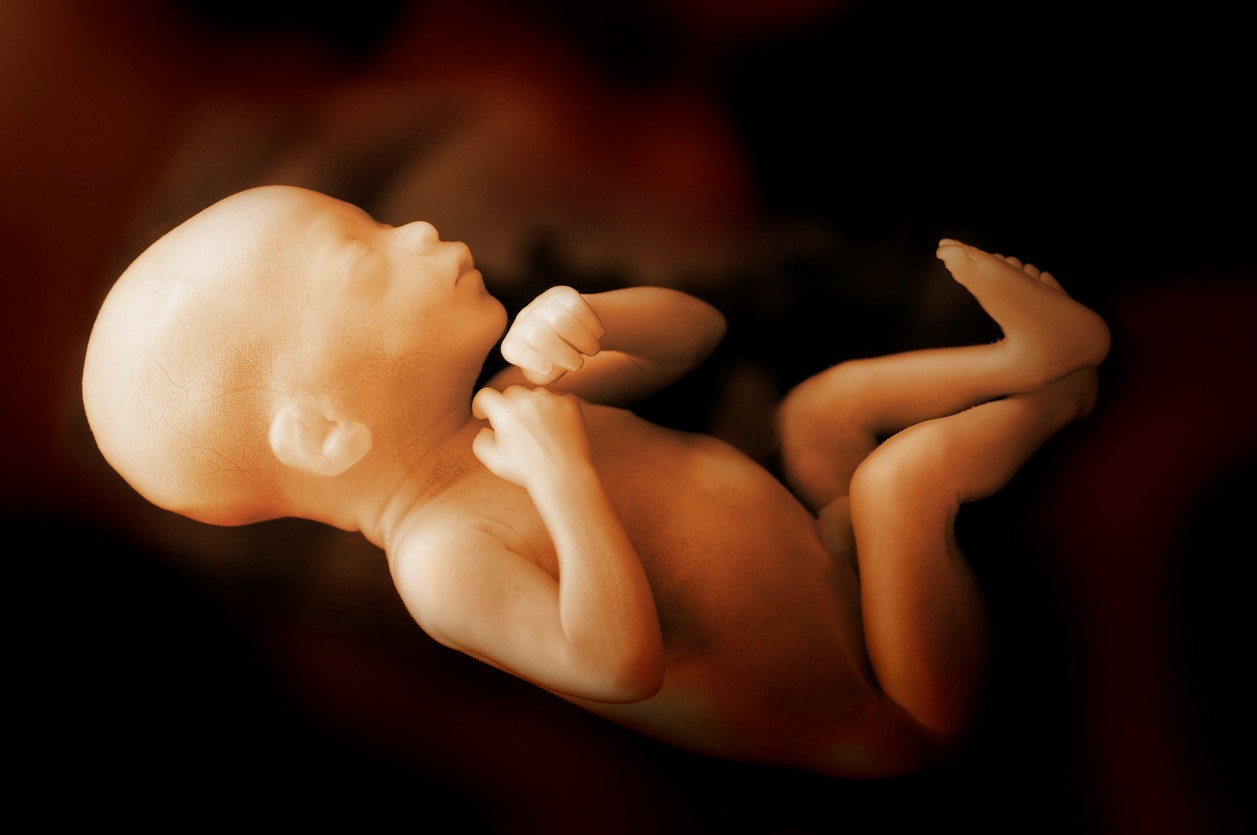
The sanctity of human life is not ultimately affirmed by social policy, but by the presence of the Son of God in the womb. When God chose to redeem the world, He did not do so from a distance. He entered human existence Himself – at its earliest stage. The Son of God did not become human at birth or at some later phase of development. He became human when life first began in His mother’s belly. From that first moment in secret, our Lord shared the same fragile, dependent, and vulnerable condition that marks every unborn human life.
For this reason, Christ’s presence in utero stands as heaven’s clearest and most enduring testimony to the sacredness of the unborn. Long before modern debates, medical imaging, or biological charts, God bore witness through His own Son that life in the womb is fully human, endowed with the highest dignity, and precious beyond measure. Christ did not merely pass through the womb on His way to something more important. He sanctified it by dwelling there through every point of human formation.
When the angel announced to Mary that she would conceive, he spoke not of a future humanity yet to arrive, but of something Holy at the very first. “The Holy Ghost shall come upon thee, and the power of the Highest shall overshadow thee: therefore also that holy thing which shall be born of thee shall be called the Son of God” (Luke 1:35). It was at this point and through this means that the Divine chose to enter at the threshold of humanity.
This truth is more humbling than we often realize. The eternal Son of God began His earthly life as a single cell, invisible to the human eye. Think of it – God as a single cell. The weight of it is almost overwhelming! The Omnipotent, Omnipresent, Omniscient One, who spoke light into being and upholds all things by the Word of His power, willingly confined Himself to the smallest and most vulnerable form of human life. Modern science now confirms what Scripture had already shown: at fertilization, with the formation of a zygote, a complete, genetically unique human organism is present. The Son of God did not assume a partial humanity that would, at some point later, become complete. He was fully human from the moment of conception.
Christ also did not bypass the earliest and most fragile seasons of human life. Having started in the womb, He passed through every stage of human development -implantation, the forming of organs, the emergence of a heartbeat, and the development of the nervous system. Scripture summarizes this with remarkable clarity: “Wherefore in all things it behoved him to be made like unto his brethren” (Hebrews 2:17). By inhabiting each stage, Christ affirmed every one as hallowed. All of it was intentional. None of it was incidental, and none of it was expendable.
Via the womb, Christ also embraced dependence – the same frail and wholly reliant condition that marks every unborn human life. The Son of God – God incarnate – was nourished, protected, and sustained by His own creation – His mother. The One by whom all things consist chose to be sustained by another. This sacrificial self-emptying – this laying aside of divine prerogatives, privileges, and immunity from suffering – did not begin at the Cross; this redemptive act started when Christ entered the most precarious bodily condition imaginable – life in the womb. In doing so, He overturned the lie that human value rests in autonomy, strength, or viability. This dependence did not disqualify humanity for Him; it defined the condition He willingly and lovingly embraced.
For nine months, God’s great redemptive work through His Son unfolded in secret – within the womb of an unassuming teenage girl from Nazareth. This hiding place was not accidental, but blessed. What God forms uncelebrated, unacknowledged, and unobserved by others, He fully treasures.
This is a critical point that speaks directly to our time. The womb is hidden, and because it is, the lives within it are often treated as morally negotiable. Abortion has advanced, largely in part, because it takes place where eyes do not see, and conscience is not immediately confronted by its violence. Yet whenever the veil is momentarily lifted – through an ultrasound image, a heartbeat heard, or an unborn child’s movement recognized – hearts often change. Such moments do not create life or its dignity; they simply uncover the beauty and glory of life already there.
Scripture also teaches that God knit together the Redeemer’s body in the womb. “A body hast thou prepared me” (Hebrews 10:5). Humanity’s redemption required real flesh and real blood, for “without shedding of blood is no remission” (Hebrews 9:22). Christ’s atoning blood for the sins of the world – blood that alone could save from sin – did not come into existence at Calvary. This precious blood was made and sustained long before, prepared by God cell by cell within Mary’s womb.
God did not enter human life at birth; rather, God entered life when it first began inside the mother. In doing so, He bestowed the highest dignity upon the unborn. The value of the unborn does not arise from human recognition, social usefulness, or even legal protection, but from God’s own action in Christ. What the Son of God assumed, He redeemed. What He redeemed, He honored. What He honored, He called sacred. Therefore, no individual or human authority has the right to destroy innocent human life.
For A Deeper Dive Into this Subject, Read the Companion Article: Seven Witnesses to the Sacredness of Life in the Womb.