
Why Empathy Must Be Governed by Truth to Heal a Nation
by Rev. Mark Creech
RevMarkCreech.org
Empathy is widely celebrated in our public life. We are told it should guide our politics, shape our policies, and soften our judgments. To lack empathy is considered a moral failure; to appeal to it is often enough to settle an argument. Increasingly, empathy is not treated merely as a virtue, but as the highest moral authority – one before which all other considerations are expected to bow.
Empathy itself is not the enemy. Properly understood, it is a gift from God. Scripture calls us to “weep with them that weep” (Romans 12:15) and to bear one another’s burdens. A hard-hearted people is a dangerous people.
But there is something more dangerous still: empathy divorced from truth.
When empathy translates into compassion severed from sound moral judgment, responsibility, and long-term consequence, it ceases to be a healing force and becomes a tool – easily manipulated, emotionally charged, and politically weaponized. Feeling deeply is no guarantee of acting rightly. History offers sobering proof that when empathy and compassion are untethered from truth, they do not heal.By “truth,” I mean the moral reality God has revealed in Scripture, not the shifting sentiments of the age.
One life offers a clear illustration of this principle.
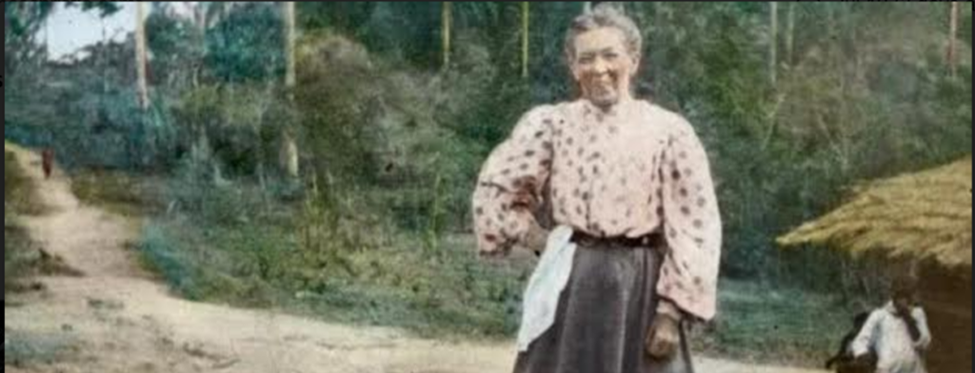
Recently, I came across a fascinating book titled Sources of Power in Famous Lives, published in 1936. And written by Walter C. Erdman. Near its conclusion is a chapter on Mary Slessor – a remarkable woman whom the author describes as one of “God’s heroines,” possessing a life story “more incredible than the wildest fiction.”
As a missionary, Mary Slessor served on the Calabar Coast of West Africa, in present-day Nigeria. There she walked alone in a region defined by violence, superstition, and the routine killing of unwanted children – particularly twins, whom local tribes believed were demons destined to bring death and calamity. Mothers who gave birth to twins were driven from their villages, condemned to wander like animals among the beasts.
This was only one of the horrors of that land and time. Writing of Calabar, Erdman cited the words of the great David Livingstone, who described it as “a land mysterious and terrible, ruled by witchcraft and the terrorism of secret societies; where the skull was worshipped and blood sacrifices were offered to Jujus; where guilt was decided by ordeals of poison or boiling oil; where scores were murdered when a chief died; where men and women were bound and left by the waterside to placate the god of shrimps…a land of darkness and fear.”
Mary lived among these people for decades. She confronted witch doctors, exposed secret murders, rescued children marked for death, and refused to treat these practices as cultural matters that should not be judged. Her influence became so undeniable that the British government eventually appointed her a consular agent in a district where its own officials had not yet dared to live. It was said that the Bible was her constant companion and guide.
Where our age excuses evil in the name of empathy, Mary Slessor allowed Scripture to discipline her compassion.
This tension is especially evident in our own cultural moment. Empathy is routinely elevated above truth, rather than ordered beneath it. When that happens, moral clarity is sacrificed in the name of sensitivity, and judgment is portrayed as cruelty rather than responsibility.
In our time, this problem has taken on a distinctly gendered dimension – not because women are morally deficient, but because many women possess a profound capacity for empathy. That capacity is a strength. When rightly ordered, it is a blessing to families, communities, and nations. When misdirected, it can be exploited.
Research helps explain why this dynamic is so influential today. Studies from institutions such as the Brookings Institution suggest that women, particularly younger women, are often more engaged than their male peers in certain forms of political activism, especially civic and cause-based activities frequently framed around social issues, community care, and perceived equity. Causes characterized by emotionally compelling terms often gain rapid traction among women, in part because empathy resonates so deeply with them. But when empathy is appealed to without sound moral guardrails, it can be redirected toward ends that undermine the very good it seeks to protect.
This misdirection is most evident when empathy is trained to recognize only one victim while rendering others invisible. Nowhere is this clearer than in the abortion debate. Appeals focus almost exclusively on the fear, hardship, or desperation of the mother, often narrated in deeply personal and emotionally charged terms, while the life of the unborn child is treated as an abstraction, a complication, or denied standing altogether. Compassion is narrowed rather than enlarged. Empathy is permitted to see one life clearly only by refusing to see another, and the unseen life is the one that dies.
A second manifestation appears when empathy ignores consequences. Increasingly, compassion is invoked to justify policies that weaken public safety or undermine family stability – calls to empty prisons without regard for victims, to dismantle parental authority in the name of protecting certain children, or to erode national borders based solely on heartbreaking stories. In each case, suffering is real and deserves concern. But policies shaped by emotion alone, without regard for long-term social cost, often impose their heaviest burdens on the very communities least able to absorb them.
These examples reveal the same underlying confusion: empathy has been elevated above truth rather than ordered to submit to it.
Here, Mary Slessor’s life provides a corrective.
She felt profound empathy for the people of the Calabar Coast. She was not emotionally detached, stern, or aloof. Her compassion was visceral. She grieved injustice and was moved by suffering. Yet she did something rare and bracing: she showed deep empathy without allowing it to become an excuse for injustice. She loved the people enough to confront their destructive practices – such as infanticide and violent superstition. Such compassion, disciplined by Scripture and not by feeling and consensus, willing to name sin plainly and not just oppose harm abstractly, willing to bear the Cross of personal cost, is something almost nonexistent in our time.
In Mary Slessor, we see a vision of womanhood our age struggles to articulate – strong without being strident, tender without being naïve, courageous without being cruel. She did not demand power; she exercised influence. She did not bend morality to fit the sentiments of the hour; she proclaimed God’s ways and called people to the wisdom of obedience. She did not discard her femininity or apologize for it. She revealed its true strength through sacrificial obedience, standing firm on the truth of God’s revealed will – even at great personal cost.
Our nation does not need less empathy. It needs better empathy – empathy informed by God’s truth, anchored in His moral reality, and willing to embrace a costly Christ-shaped obedience.
Mary Slessor reminds us that such compassion is neither harsh nor regressive. It is the means by which lives are truly saved, cultures are truly corrected, and the vulnerable are truly protected.
That lesson is not outdated.
It is urgently needed.