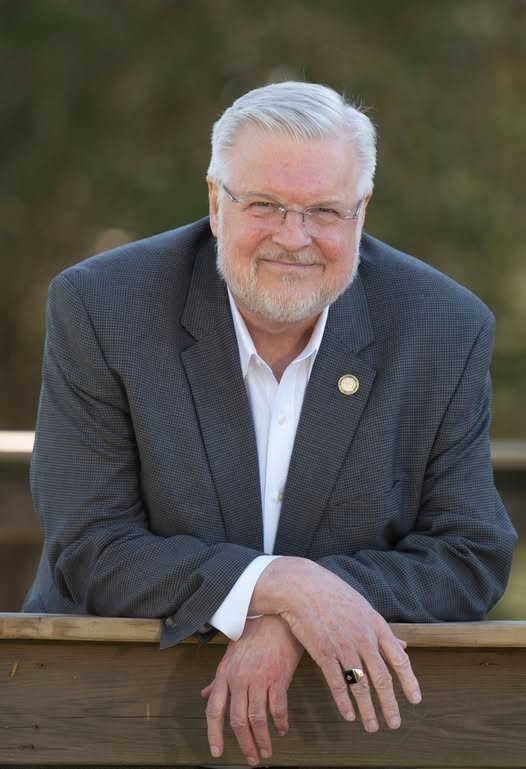

by Rev. Mark Creech
RevMarkCreech.org
“The wicked, through the pride of his countenance, will not seek after God: God is not in all his thoughts” (Psalm 10:4).
There is a true story about an old chief of an East African tribe who once told a missionary, “I am much puzzled by God’s death.”
The missionary, startled, asked, “When did God die?”
The chief pointed toward the place in the sky where the sun would stand about eight o’clock in the morning. “Last season,” he said. “God became ill and died.”
Later, the missionary discovered what the chief meant. The tribe worshiped the sun, and the previous year, they had witnessed a total solar eclipse. To them, the sun had disappeared and then returned. Consequently, the chief had concluded God had died for a time and then recovered.
“But it is a bad thing for this earth when God takes a turn like that,” the chief said.
The missionary eventually explained the eclipse, and the tribe was greatly relieved to learn that God had not died at all. In fact, He had never even been sick.
Yet the old chief’s observation still rings true: it is a bad thing for this earth when God dies.
It is a bad thing for a country when God fades from its life.
It is a bad thing for a country when God fades out—when He becomes little more than a memory, when His moral law no longer shapes our conduct, when His authority is dismissed, and His name is used ceremonially but without genuine devotion.
It is a bad thing when God becomes only a shadow of a glorious past, when His presence is eclipsed in a nation’s life.
Yet we are living in a strange moment in American life.
On the one hand, practical atheism is pervasive. Although millions still check the religious box on surveys, most live as though God is unnecessary to everyday life. Public morality has become disconnected from Scripture. Personal autonomy is treated as the highest good. God is acknowledged in ceremony but ignored in conduct.
America has not become officially atheistic, but we have come dangerously close to becoming functionally godless. That is always a perilous place for any people.
It is alarming to watch Americans casting off the religious moorings that once anchored our liberties. Much of our history has either been forgotten or deliberately buried.
The American Revolution was not merely a political movement. As historians Stephen McDowell and Mark Beliles argue in Liberating the Nations, it was deeply shaped by a biblical worldview that united and motivated the colonies in resistance to tyranny.
The Continental Congress repeatedly sought God in prayer as it crafted legislation. Patrick Henry, a fiery patriot and orator, declared, “Give me liberty or give me death,” while urging resistance to a king who was stripping the people of their God-given rights.
George Washington called his troops to prayer and often prayed himself.
The Declaration of Independence appealed to “the Supreme Judge of the world” and expressed “a firm reliance on the protection of Divine Providence.”
The Constitution itself was framed in the belief that government exists not to create rights, but to secure and protect those granted by God.
Noah Webster summarized the matter plainly:
“Almost all the civil liberty now enjoyed in the world owes its origin to the principles of the Christian religion…The religion which has introduced civil liberty is the religion of Christ and his apostles, which enjoins humility, piety, and benevolence; which acknowledges in every person a brother, or a sister, and a citizen with equal rights. This is genuine Christianity, and to this, we owe our free constitutions of government…”
Freedom is profoundly spiritual because man belongs first to God, not the state.
The late and renowned Methodist minister, J. Wallace Hamilton, explained it this way. He said, “He [God] chose to make a person, to set man down in this rough and risky world with the awful power to choose his way, to make or mar his destiny, to climb the heights or sink in the depths. It is an exceedingly dangerous endowment, this freedom. But without it, what is man? We are beginning to see what man is without it as, in one country after another, he has lost it and turned over his gift to the strong man, lost his personality in the mass mind and the mass will. And we’ve had some frightening glimpses of the corrosion of the human spirit when human beings forget who they are and try to explain themselves as the offspring of the world only.”
Hamilton wrote those words during the Cold War, when atheistic communism threatened the free world. His warning seems quite relevant today.
Recent polling suggests that nearly two-thirds of Gen Z college students hold a neutral or positive view of socialism. A Cato Institute/YouGov survey found that 62 percent of Americans under thirty view socialism favorably, while more than a third of those aged 18–29 express favorable views of communism.
History shows that systems rooted in atheistic materialism tend to diminish human dignity, suppress creativity, and concentrate power in the state’s hands.
Beneath many of these developments lies a deeper philosophical shift.
If we are nothing more than, as Marquis de Sade once wrote, “miserable creatures thrown for a moment on the surface of this pile of mud,” then it becomes difficult to believe that human life possesses inherent dignity or that human rights are anything more than social conventions.
Scripture teaches something profoundly different.
Human beings are made in the image of God.
This truth explains why an unborn child from its earliest stage of development possesses an inherent right to life. It explains why conscience must be free from government coercion. It explains why liberty of speech, property rights, and limited government have been cherished in the Western tradition.
Man’s life is first and foremost accountable to his Creator. He doesn’t exist for the sake of the state; he wasn’t created to serve the state; he was created to serve God. The state exists to safeguard his God-given liberties – something no person, no authority, no government is allowed to infringe upon. There is no law, nor court, nor ruler, to whom one may appeal higher.
When the light of God is eclipsed, freedom itself begins to grow dim.
But what happens when our liberties are detached from the God who gave them?
What happens when the flowers of freedom are cut off from the sunlight that nourishes them?
Flowers live by the sun.
Freedom lives by God.
When a nation begins to live as though God were unnecessary, a dangerous eclipse of the very light that gives life meaning, purpose, and direction occurs.
This is precisely where the vast majority of Americans find themselves today.
Truth is increasingly treated as irrelevant. Moral boundaries are considered optional. The claims of Jesus Christ and the authority of Scripture are often pushed aside as relics of another era.
Yet our rights, our Constitution, and our entire system of ordered liberty grew from the moral soil of the Judeo-Christian faith and flourished in its light. When that light is eclipsed, the institutions that grew from it cannot long survive.
Nations do not lose God because He disappears. They lose Him because they choose to live without Him.
We are living in a time of great testing.
Edwin Markham, in his poem The Testing, tries to catch something of God’s mind about how he proves us – how he examines and evaluates our character to determine whether we should be blessed to bask in His light. He writes,
I will leave man to make the fateful guess
Will leave him torn between the No and Yes,
Leave him unresting till he rests in me,
Drawn upward by the choice that [actually] makes him free –
Leave him in tragic loneliness to choose,
With all in life to win or all [in life] to lose.
One thing about an eclipse: the light eventually returns.
But we must make a choice. Nations do not lose God because He disappears. They lose Him because they choose to live without Him. We must choose God again if his light is to shine upon us.
We must choose Him—individually, in our families, and as a people.
Because it is a bad thing when God “dies”— when we live as though He were dead.
The good news is: God is not dead. He is not even sick.
And if we stop treating Him as though He were dead, we may yet see His light shine with a new birth of freedom.
This article is adapted from a sermon of the same title written and delivered by Rev. Mark Creech.