by Dr. Mark Creech
Director of Government Relations
Return America
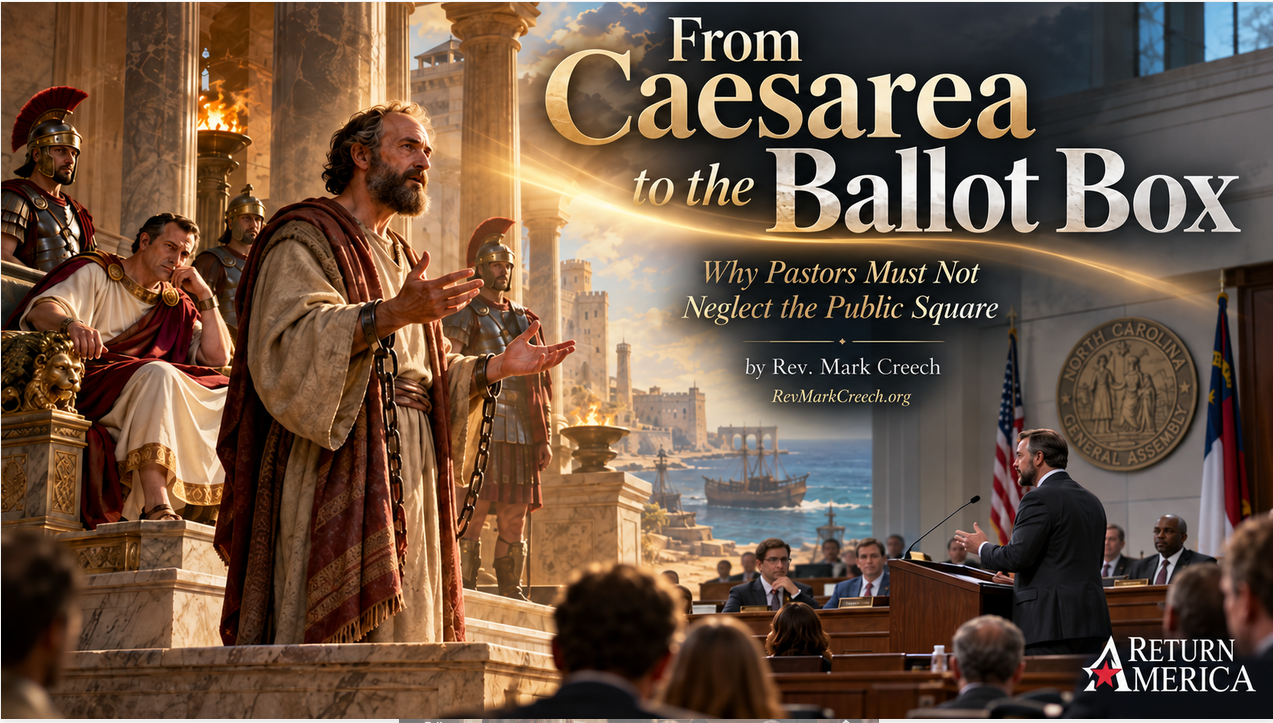
I remember visiting Caesarea Maritima in Israel, where the apostle Paul stood before King Agrippa to make his defense. We were at the site of the great audience hall described in Acts 25, where Agrippa and his sister Bernice entered “with great pomp,” accompanied by military commanders and the city’s prominent men.
As I stood there, I could almost picture the scene: the impressive procession of rulers and dignitaries, the display of earthly power, and then Paul, a prisoner in chains, brought before them to answer his accusers. Yet this seemingly powerless prisoner had something of eternal significance to say.
In that moment, something inside me broke, and I began to weep uncontrollably.
I could not explain my emotions. In fact, I was somewhat embarrassed by my tears and lack of composure, wondering why I had been so overcome. I had visited a historic biblical site, yet my reaction seemed far greater than the occasion warranted.
Only years later, as my ministry unfolded, did I come to understand why that moment remained so deeply etched in my memory.
I would eventually find myself standing before North Carolina lawmakers, defending righteousness, appealing to the consciences of those entrusted with public authority, and seeking to apply biblical truth to decisions that shape our society.
When I stood at Caesarea, I never imagined that a similar responsibility would become part of my calling. Our circumstances were vastly different, and I would never presume to compare my ministry with Paul’s unique apostleship. Yet I came to recognize a similar solemn responsibility: speaking God’s truth before those in authority.
I thought I was weeping over Paul’s past, but years later I began to understand the burden I would carry in my present. The experience reminds me that God’s servants are sometimes called to bear witness in places they never anticipated.
When Paul addressed Agrippa, he did not merely defend his innocence. He proclaimed Jesus Christ’s suffering and resurrection. He spoke so directly to the king’s conscience that Agrippa responded,“Almost thou persuadest me to be a Christian” (Acts 26:28).
Paul’s answer was equally remarkable. He wished that Agrippa and everyone listening might become as he was, except for his chains. Even before royalty and the powerful men of his day, Paul’s deepest concern was their relationship to Christ.
Recently, Southern Baptist Convention President Willy Rice urged pastors to become more engaged in the political process. He noted that many contemporary political questions are fundamentally theological and moral. His appeal deserves serious consideration.
Not every pastor is called to lead a public-policy ministry, to testify before legislative committees, or to spend his days in the halls of government. God assigns different responsibilities to His servants.
Nevertheless, every pastor should help equip Christians to engage the great moral and social questions of our time. Moreover, when necessary, he must speak with prophetic courage, confronting powerful interests with the uncompromising authority of God’s Word: “Thus saith the LORD.”
Granted, the church must never confuse the gospel with a political party. We must also beware of the pulpit becoming a campaign headquarters. Our first calling remains to proclaim Jesus Christ, to preach salvation to sinners, and to make disciples.
But evangelism is not an excuse to remain silent about society’s moral direction.
The same Bible that teaches reconciliation with God also speaks to the sanctity of human life, marriage, sexuality, family, justice, integrity, compassion, and our responsibilities toward others. When these matters become political controversies, they do not cease being biblical concerns.
Indeed, when the culture politicizes a moral issue, it does not thereby relieve the church of its responsibility to address it.
Pastors should lead the charge in preparing God’s people for faithful citizenship by preaching the whole counsel of God and teaching believers to evaluate public questions through a Christian worldview.
This is part of making disciples.
Moreover, Christians should not leave their faith at the church door when they enter the voting booth. Scripture-shaped convictions ought to inform their judgments about candidates, policies, and the moral consequences of public decisions.
This brings us to North Carolina’s upcoming midterm elections.
In-person early voting began on October 15 and runs through October 31. This Saturday, early voting concludes at 3:00 pm at early voting locations in North Carolina. Election Day is Tuesday, November 3.
You can easily find an Early Voter location near you by visiting this link and entering your county. And Voila! It’s just that easy!
This election’s outcome will influence decisions that affect our families, communities, religious liberties, and the future direction of our state and nation, perhaps for generations.
Indeed, political victories cannot produce spiritual regeneration or establish Christ’s kingdom on earth. Nonetheless, government decisions can protect religious liberty, promote justice, restrain evil, and create greater opportunities to proclaim the gospel. Conversely, government can make the church’s work much more difficult.
Therefore, pastors should encourage their congregations to become informed, carefully examine candidates, weigh their positions against biblical principles, pray earnestly, and vote conscientiously.
Paul stood before King Agrippa and proclaimed Christ without apology. Most pastors will never address a king, a governor, or a legislative committee. Nevertheless, every pastor regularly stands before people whose daily decisions help shape our society’s character.
That is no small responsibility.
Our state and nation need churches that faithfully preach Christ and equip believers to carry biblical truth into every sphere of life, including the government.
As November 3 approaches, may our pulpits remain faithful, our congregations become informed, and Christian citizens act on their convictions by going to the polls and casting their votes with courage, discernment, and a deep sense of responsibility to God.
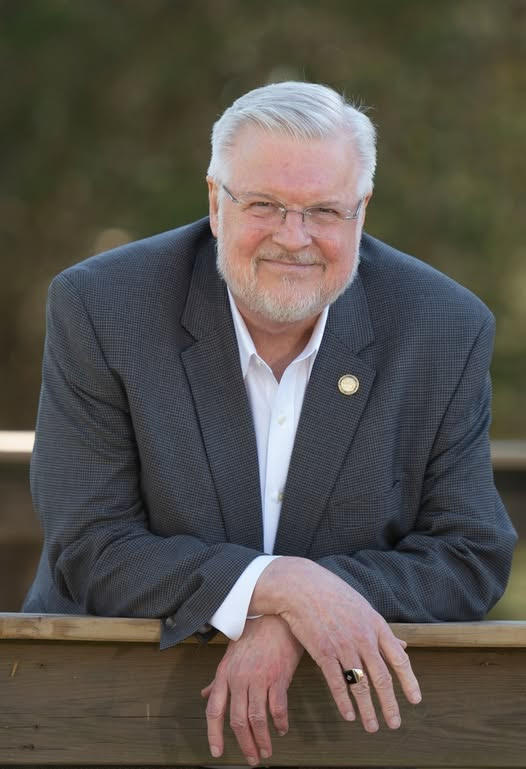
Rev. Mark Creech served as pastor of five Southern Baptist churches in North Carolina for 20 years and as executive director of the Christian Action League of North Carolina for 25 years. He currently serves as Director of Government Relations for Return America.
From Caesarea to the Ballot Box: Why Pastors Must Not Neglect the Public Square first appeared in the Biblical Recorder, the journal for the State Baptist Convention of North Carolina.
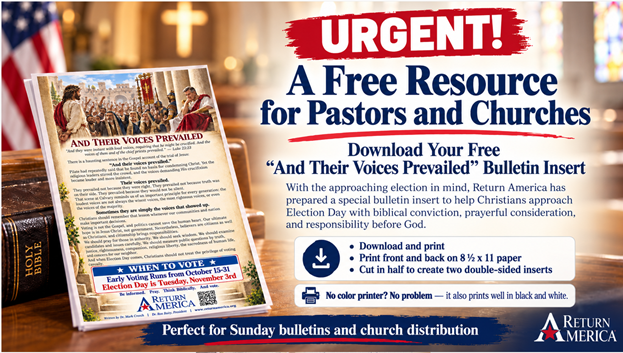
A Free Resource for Pastors and Churches
With the election only days away (Nov. 3), Return America has prepared a special church bulletin insert based on the message, “And Their Voices Prevailed.”
The insert encourages Christians to approach Election Day with biblical conviction, prayerful consideration, and responsibility before God.
Pastors and churches are welcome to download, print, and distribute the insert in their Sunday bulletins or make it available to their congregations.
Download Your Free “And Their Voices Prevailed” Bulletin Insert:
How to Print Your Church Bulletin Inserts
Download the PDF and print the first page on standard 8½ × 11-inch paper. Turn the printed sheets over, return them to the printer, and print the second page on the blank side. Be sure both sides are printed in the same orientation. Then cut each sheet in half at the 5½-inch mark to create two double-sided bulletin inserts, ready for distribution.
No color printer? No problem! The inserts can also be printed in black and white.
Tip: Print one test sheet first to make sure both sides line up correctly before making multiple copies.