
by Dr. Mark Creech
Director of Government Relations
Return America
The North Carolina General Assembly returned to Raleigh last week to resume the people’s business. From the outset, it was clear that this session would be marked by urgency and uncertainty. With the state still operating without a finalized budget and key policy disagreements unresolved, lawmakers moved quickly to address immediate needs while signaling where the larger debates are headed.
In one of their first actions, legislators approved funding to sustain Medicaid operations through June, pairing the extension with new anti-fraud measures and audit requirements – a clear sign that fiscal oversight remains a priority even amid broader budget negotiations.
Meanwhile, on opening day – Tuesday, April 20 – Governor Josh Stein unveiled his budget proposal, outlining an ambitious agenda that includes 15% pay raises for law enforcement and nurses, a push to make North Carolina the Southeast’s leader in starting teacher pay, a proposed tax freeze, and $115 million for school repairs.
Despite these competing visions, leadership in both chambers expressed cautious optimism about reaching a final budget agreement. The current goal is to have a budget in place by July 2. However, a central point of contention between the House and the Senate remains the pace of income tax cuts. Senate leader Phil Berger has indicated support for maintaining the benchmarks set in 2023, while House Speaker Destin Hall has advocated a slower approach unless state revenues increase.
While these budget discussions will dominate much of the session, the first week also brought key policy issues to the fore that deserve close attention from those concerned with the moral and cultural direction of our state.
Two of those issues, in particular, are already on Return America’s radar and will be important to watch as the session unfolds.
HB 328: Closing the Loophole or Building a Market?
First, the North Carolina House considered House Bill 328 – Regulate Hemp Consumables and voted not to concur with the version previously passed by the Senate. As a result, the bill did not advance in its current form and will now either move to a conference committee for further negotiation or stall altogether.
HB 328 is being promoted as an effort to bring order and safety to what has become a widespread, largely unregulated market for hemp-derived THC products. These products, readily available in retail stores across the state, can produce intoxicating effects similar to marijuana but have operated in a legal gray area created by federal hemp law.
There is broad agreement that the current situation is problematic and that inaction is not a responsible option. However, serious concerns remain about the direction this bill takes in addressing the problem.
At its core, HB 328 addresses a loophole that has allowed intoxicating THC products to proliferate under the guise of “hemp.” The central policy question is whether the proper response is to close that loophole or to formalize and regulate the market that has emerged from it.
As written, the bill leans toward the latter. It establishes a structured system for the manufacture, distribution, and sale of these products, including licensing, testing requirements, and age restrictions. While these measures are intended to improve safety, they also risk doing more: legitimizing and entrenching the market itself. Once a commercial framework is in place, with businesses, revenue streams, and regulatory systems, it becomes increasingly difficult to reverse course. What begins as an attempt to control a problem will inevitably evolve into long-term normalization.
Recent federal developments make this concern even more pressing. President Trump’s decision to reclassify marijuana from a Schedule I to a Schedule III substance, while not legalizing it, signals a broader shift toward greater acceptance and economic viability for the industry. By easing regulatory burdens and opening the door to significant tax advantages, this change strengthens the marijuana market’s financial foundation nationwide. In turn, it places additional pressure on states like North Carolina to adopt similar policies.
In that context, HB 328 is not merely a response to a local regulatory gap. It is a step in the same broader direction – toward formalizing and stabilizing a market for intoxicating THC products at the state level, even as that market is gaining momentum at the federal level.
The bill also raises a consistency issue. While it would ban Kratom outright (a worthy step), it permits the regulated sale of THC products. This raises important questions about the seemingly arbitrary principles that guide substance policy in North Carolina.
Finally, there is concern that the bill may not ultimately achieve its stated goals. If the objective is to reduce exposure, especially among young people, then building a system that accommodates and stabilizes this market will, over time, undermine that goal.
For these reasons, a more coherent approach would focus on closing the loophole that allows intoxicating hemp-derived THC products to exist in the first place, rather than on constructing a regulatory framework that will expand and normalize their use.
A good sign, however, is that the House’s decision not to concur reflects the ongoing division among lawmakers over how best to address this issue. We are very likely to hear a lot about it in the coming weeks. We will continue to monitor developments closely as the future of HB 328 is decided.
LGBTQ+ Book and Instruction Restrictions
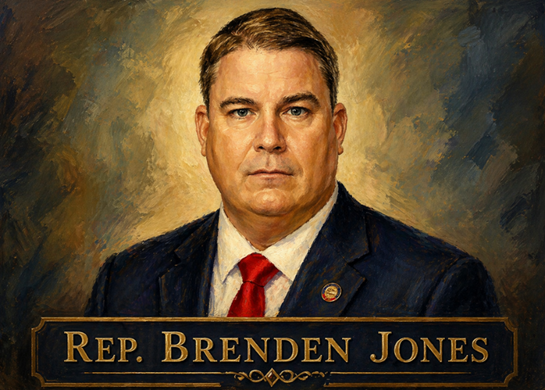
House Majority Leader Brenden Jones has decided to advance HB 1043 – CHCCS Act, which would strengthen the state’s Parents’ Bill of Rights by restricting books on gender identity and sexuality in elementary school libraries. The move signals that education and parental authority will be a major focus this session.
This proposal comes in the wake of a legislative hearing in which lawmakers raised serious concerns about whether Chapel Hill–Carrboro City Schools were complying with the state’s Parents’ Bill of Rights, particularly regarding the availability of sexually explicit or age-inappropriate materials to younger students. Although school officials denied any violation, the evidence presented made it abundantly clear that they were violating the law. The hearing prompted calls for stronger enforcement mechanisms to ensure the law is followed.
Rep. Jones’ bill would expand North Carolina’s current ban on teaching about gender and sexuality to cover elementary school library materials.
It would require parental consent for students to use different names or pronouns and for any counseling related to gender or sexuality.
It allows parents to sue schools for $5,000 for each violation of the Parents’ Bill of Rights.
It authorizes withholding state funds from schools that are noncompliant.
The measure would likely pass. However, Governor Josh Stein will probably veto the bill. Republicans in the Senate could override the Governor’s veto with their supermajority. The House Republicans, however, are one seat short of a supermajority and would need at least one Democrat to cross over to override the Governor’s veto. It will be interesting to see how these matters play out. Three Democrats were targeted by the Governor for defeat in the primaries, and each lost their seat. Under such circumstances, they may have no qualms about crossing over to get the measure across the goal line.
In a Facebook post, Rep. Jones said, “When I first came to Raleigh, I made a commitment to stand firm for Christian, conservative values. That commitment hasn’t changed. With the introduction of HB 1043, I will continue fighting for our children and for the rights of parents across our state. Parents deserve to know fully what’s happening in their children’s classrooms.”
******
As the General Assembly resumes its work, the first week has already shown that this session will involve more than budget debates. It will address issues at the heart of our state’s moral character.
From regulating hemp-derived THC products to strengthening parental rights in education, lawmakers are addressing issues that will directly affect families, children, and communities across North Carolina. These are not abstract concerns. They will shape the values that will guide our state in the years ahead.
For those connected to Return America, this means staying informed, speaking out, and contacting your lawmakers, while remaining prayerful for them and their leadership.
The weeks ahead will be important. Return America will continue to monitor these developments and keep you updated.