by Rev. Mark Creech
RevMarkCreech.org
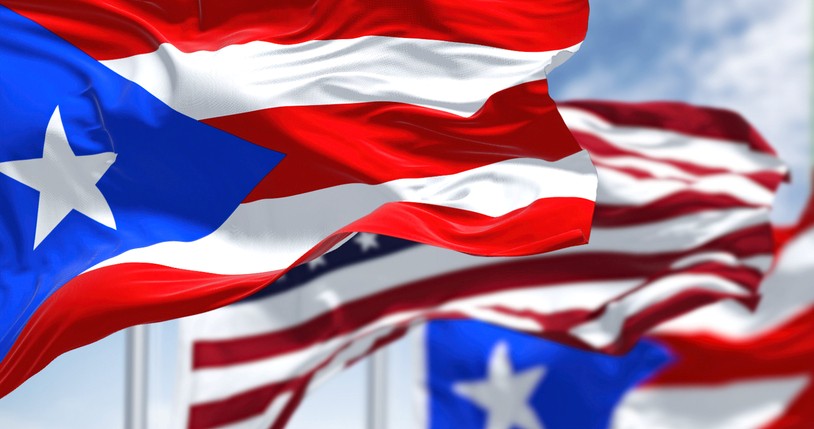
In the very same news cycle that saw wall-to-wall coverage of pop star Bad Bunny’s headline-grabbing cultural moment, a development of profound moral and legal significance in Puerto Rico received comparatively little sustained attention. While the Associated Press and a handful of national outlets reported that the territory’s governor had signed legislation recognizing unborn human life in the criminal code, the story largely moved through wire coverage and quickly faded from the national conversation.
The measure itself does not ban abortion, and its full legal implications remain to be seen. Even so, when a U.S. jurisdiction formally adopts statutory language recognizing human life at conception, it marks a consequential moment in the nation’s continuing debate over the protection of the unborn, one that should have warranted more than a passing glance.
The law, signed by Gov. Jenniffer González-Colón, amends Puerto Rico’s Penal Code so that the term “human being” expressly includes the conceived child at any stage of gestation. As National Right to Life observed in response to the measure, “the government now writes, in black and white, that the child in the womb is a human being.” In law, definitions shape outcomes. They guide how courts interpret statutes, how prosecutors evaluate cases, and how society understands who is entitled to protection under the law.
For decades, the central fault line in America’s abortion debate has turned on a single foundational question: Who counts as one of us? By formally recognizing the unborn child within its criminal code, Puerto Rico has taken a step that directly engages that question at the level of legal principle.
This matters for several reasons.
First, legal recognition establishes moral clarity. When the law speaks clearly about the humanity of the unborn, it influences not only courtrooms but culture. Law is a powerful moral teacher. It signals what a society is willing to protect and what it is willing to ignore. Luis Soto, executive director of the Puerto Rico Baptist Convention, welcomed the measure, saying, “We are grateful for legislation that recognizes life at conception and appreciate public leaders who seek to uphold principles that safeguard those who cannot speak for themselves.”
Second, definitional changes often precede broader legal developments. Major shifts in public policy rarely occur all at once; they unfold incrementally. History shows that when jurisdictions clarify the status of vulnerable human life in statute, those definitions often shape future legislative and judicial debates.
Third, the action comes from a U.S. territory whose legal framework operates within the broader American constitutional system. Developments in Puerto Rico do not occur in isolation. As Miles Mullin of the Ethics and Religious Liberty Commission of the Southern Baptist Convention observed, “These developments demonstrate an undeniable truth: this national existential conflict over whether the most vulnerable among us should be protected and treated as people will not be ultimately resolved by the states.” Ultimately, the question will not be settled piecemeal; it will require clear moral and legal leadership at the federal level.
The episode also raises a harder question about modern media priorities. Time and again, developments with profound ethical and policy implications are eclipsed by politically left-leaning national narratives. Whatever the explanation, consequential policy decisions frequently receive far less sustained scrutiny than their significance deserves.
North Carolina, my home state, has seen something similar before. In 2012, voters approved a constitutional amendment defining marriage as the union of one man and one woman. The measure’s passage did receive some national attention, but its public impact was largely overshadowed by President Barack Obama’s announcement of his support for same-sex marriage at nearly the same moment, a development that dominated headlines and broadcast coverage.
It is difficult to believe the timing was merely coincidental. Whether by editorial instinct or ideological tilt, the effect was the same: many Americans never fully grasped the strength of the measure’s support. North Carolina had just become the 31st state to define traditional marriage in its constitution, and it did so by a decisive 69 percent to 31 percent vote. By any fair news standard, that was a major story. Yet it quickly faded from public view, another reminder that consequential policy decisions often receive far less careful treatment by the press than they actually merit.
Scripture speaks with sobering relevance to moments like these. Romans 1:18 declares, “For the wrath of God is revealed from heaven against all ungodliness and unrighteousness of men, who hold the truth in unrighteousness.” The apostle’s phrase “hold the truth in unrighteousness” carries the sense of suppressing, restraining, or holding down what is before us. Whatever one’s view of media dynamics, the warning is timeless: truth can be present in plain sight and yet still be pushed to the margins of public attention.
Puerto Rico’s new law will undoubtedly be studied, debated, and tested in the years ahead. Its full legal reach will become clearer with time. But one thing can already be said with confidence: when any U.S. jurisdiction writes into law that the child in the womb is a human being, it is not a routine legislative footnote. It is a meaningful moment in the ongoing national struggle over whether the most vulnerable among us will be recognized and protected.
In matters touching the definition and defense of human life, careful attention is not optional – it is essential to the sound judgment of a free people.