
By Dr. Mark Creech
Director of Government Relations
Return America
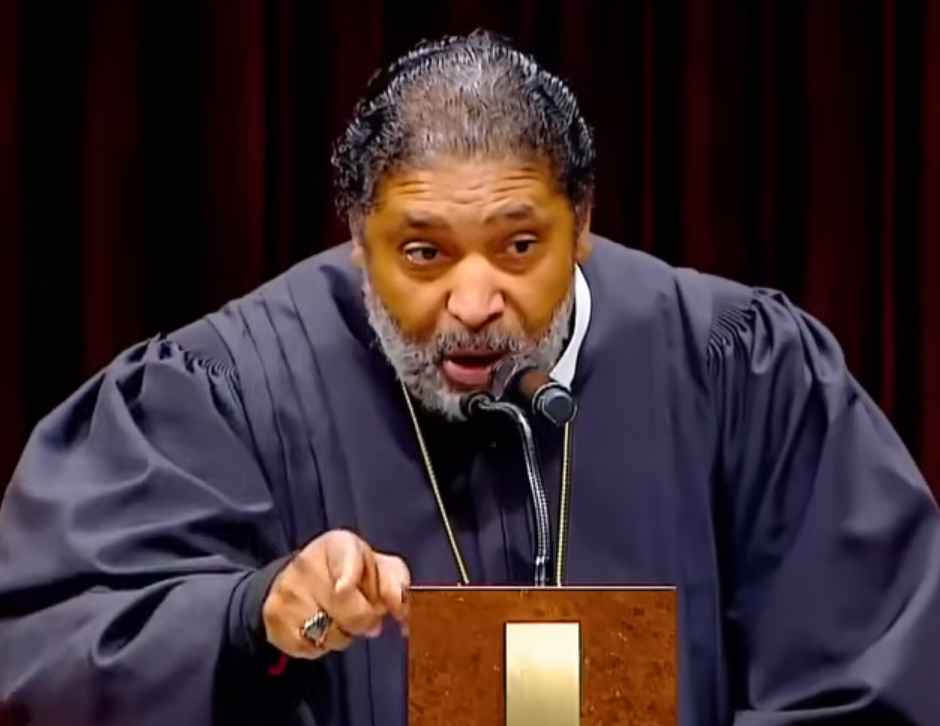
In February, a highly publicized march will begin in Wilson, North Carolina, and head toward Raleigh, culminating in rallies and demonstrations timed to coincide with the start of early voting. Led by William Barber II and organized through Repairers of the Breach and allied groups, the effort is being promoted not merely as a protest, but framed as a moral and spiritual mobilization – what its organizers describe as a modern echo of Selma and a call to “love forward together.”
In recent days, Barber and fellow clergy members have held prayer vigils inside and outside the General Assembly, featuring hymns, candlelight, chanting, and testimonies. Speaking to supporters, Barber lamented what he called “untruth, unconstitutional, and immoral actions” in public life and insisted the moment demands a “spiritual visitation” and “moral rejuvenation.” The movement, he says, is rooted in love for the Constitution and love for justice, not partisan politics, but a higher moral calling.
The agenda attached to this march is expansive: redistricting and voting laws, living wages, immigration enforcement, health care access for all, public education funding, environmental regulation, and resistance to what organizers describe as Christian nationalism. Participants are urged to “vote your love” and to view political engagement as a moral imperative.
There is no question that the language is religious, the symbolism is deliberate, and the appeal quite emotional. Yet, for all its spiritual rhetoric, this movement raises a serious and unavoidable question – especially for evangelicals committed to the authority of Scripture:
What happens when love or compassion becomes untethered from biblical truth, and the language of faith is pressed into the service of a political vision that claims a moral authority that the Scripture never grants?
Rev. Barber is a passionate preacher, and his sincerity is not in question. Moreover, those who march with him do so out of genuine concern for suffering, injustice, and social fragmentation. Compassion is indeed a biblical virtue. Scripture commands us to “open thy mouth for the dumb in the cause of all such as are appointed to destruction” (Proverbs 31:8).
Yet Scripture also warns that sincerity and religious passion are not themselves proof of divine direction. The Apostle Paul cautions believers that “Satan himself is transformed into an angel of light” (2 Corinthians 11:14) – meaning that deception often comes clothed in moral seriousness, spiritual language, and appeals to compassion. Falsehood rarely announces itself as evil. More often, it presents itself as righteousness, mercy, and justice, while quietly redefining those terms and twisting them away from what Scripture actually teaches. That is why Scripture repeatedly warns not merely to feel deeply, but to discern carefully, testing every spirit and every claim by the truth God has revealed.
In Scripture, moral virtues do not define themselves. God defines them. Justice is not a malleable concept shaped by the spirit of the age; it is rooted in the character and the revealed will of God as found in the Bible. Love does not merely affirm, but it “rejoiceth in the truth” (1 Corinthians 13:6). Mercy does not excuse, placate, or compromise with evil; it firmly confronts it with grace and calls for repentance.
When biblical words are detached from biblical authority, they are easily repurposed. They retain their emotional power but lose their moral anchor. What remains is a vocabulary that sounds Christian while functioning as a vehicle for political conclusions that Scripture itself never authorizes.
Equally troubling is the way movements like this blur the distinction between the Church’s mission and the State’s role. Many of the demands advanced – guaranteed outcomes in health care and wages, for instance – extend the role of civil governance beyond its biblical mandate. Scripture recognizes the legitimacy of government, but it also clearly defines its limitations. Civil authority bears the sword to restrain evil and maintain order (Romans 13:1–4). The Church, by contrast, is commissioned to proclaim the Gospel, make disciples, practice, and encourage voluntary charity.
When the Church seeks to harness the coercive power of the State as the instrument of love and compassion, charity becomes bureaucratic, and mercy becomes compulsory. Therefore, it isn’t real charity at all. Government can redistribute resources, but it cannot regenerate hearts. It can mandate behavior, but it cannot produce an upright life before God. History offers ample evidence that when political power is treated as a substitute for spiritual transformation, both justice and freedom suffer.
The march also warns against “Christian Nationalism” – a term so elastic it can be applied to any patriotic follower of Christ who rightly believes government should reflect biblical values – those same values that built our great country. The central question is not whether conservative evangelical Christians should engage their nation’s public life, but whether Scripture or ideology is permitted to define what justice, mercy, and righteousness mean in the public square. It is true that Christianity must never be reduced to partisan loyalty. Yet rejecting one distortion does not justify embracing another. In practice, this movement advances a rival moral orthodoxy that claims to be Christian, but defines justice primarily in terms of state redistribution – a righteousness by government provision rather than repentance, regeneration, and personal responsibility; a faith reduced to entitlements rather than transformation. Moreover, it treats its policy prescriptions as morally unquestionable and casts dissent as cruelty or hatred.
Despite Rev. Barber’s claims, this is not the removal of religion from politics. In fact, it is the opposite. “It is the replacement of biblical Christianity with a progressive Christianity – a false religion that piggy-backs on Christian language while rejecting the authority of Scripture and misrepresenting the person and ministry of Christ.
Perhaps most concerning is the elevation of empathy above consequence. Scripture repeatedly cautions against decisions driven by sentiment alone. “The simple believeth every word: but the prudent man looketh well to his going” (Proverbs 14:15). Policies promoted in the name of compassion must be judged not only by their intentions but by their outcomes. Appeals to love that ignore human sin, moral responsibility, and unintended consequences often do the greatest harm to those they claim to help.
Finally, movements of this sort often speak of systemic injustice but never speak about personal sin. There is a lot of outrage, much mobilization, and many accusations, but essentially no message calling for repentance before a holy God. Nevertheless, the Scripture is abundantly clear: lasting justice does not flow merely from rearranged political systems, but from hearts renewed by God’s Spirit. “Except a man be born again, he cannot see the kingdom of God,” said Jesus. (John 3:3).
The American founders understood this well. They believed that a free people could remain free only if they were capable of governing themselves – first morally, then politically. Liberty, in their view, was not sustained by expanding state power, but by internal restraint shaped by right-living and the Christian faith. Without self-government, they knew, external government would only grow. Without moral discipline, political freedom would collapse into chaos and demand control. Our constitutional order was never designed to manufacture virtue, but to rest upon it – to be sustained by it.
What Rev. Barber and this movement ultimately call for is the very inversion the founders warned against: shifting the burden of moral formation from the conscience of the individual to the coercive power of the state, and mistaking political mobilization for the actual moral renewal on which true liberty depends.
Everyone, especially Christians, should care deeply about suffering and injustice. But we must never permit the language of Christianity to be severed from biblical truth. When that happens, what is called love, empathy, and justice may feel righteous, but once removed from the God who defines them, they no longer sustain liberty – they erode it.
Picture: Screenshot from a YouTube livestream featuring Bishop William J. Barber II, “The Danger of Trying to Worship God Without a Conscience,” streamed March 18, 2024, via the Black Star Network. Used under fair use for purposes of commentary and criticism.