
By Rev. Mark Creech, D.H.L
RevMarkCreech.org
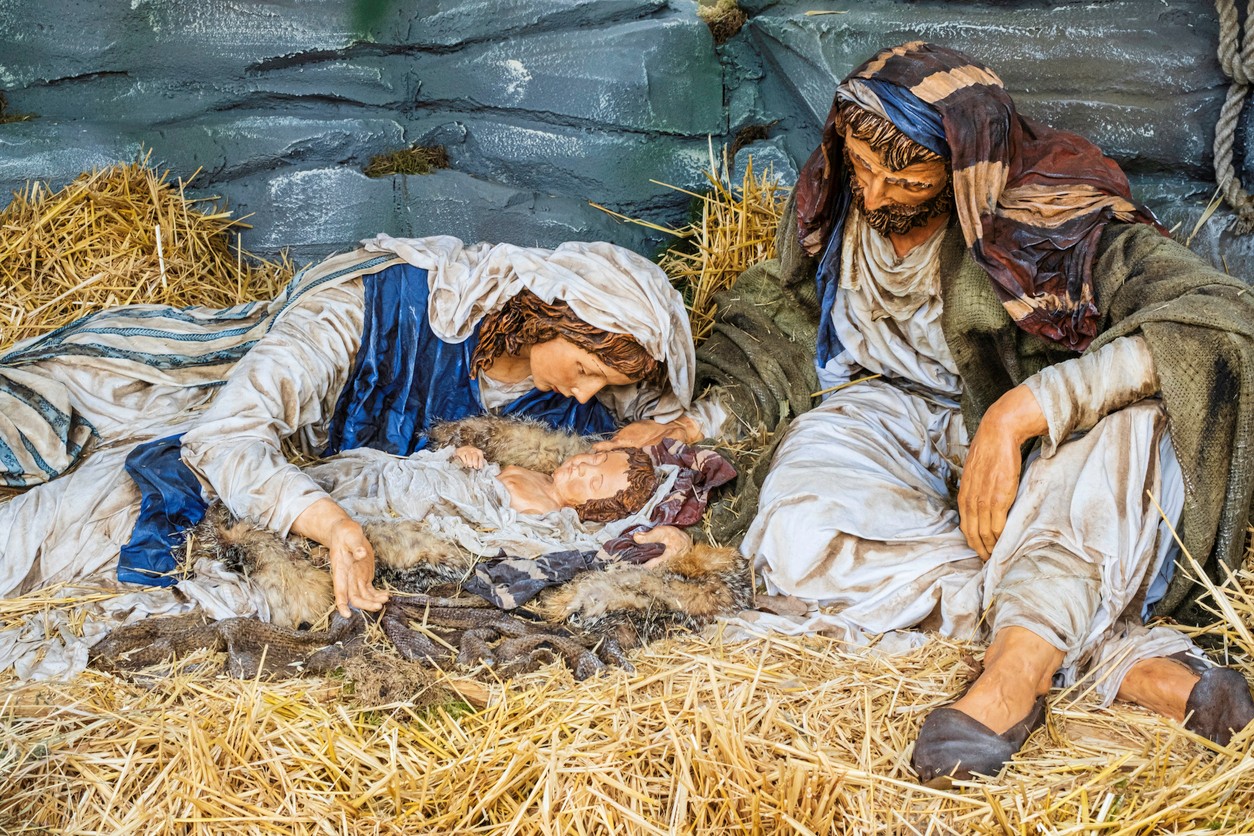
We often speak of Mary at Christmas, and rightly so. We sing of angels, marvel at shepherds, and follow the journey of the wise men. But standing quietly in the shadows of the nativity is a man we rarely stop to consider – a man whose presence is so steady, so faithful, that the story of Christ’s birth would unravel without him. Joseph appears on nearly every Christmas stage, yet we usually treat him as a silhouette: a figure with a staff, a supporting character near the manger, little more than an accessory to Mary.
But Scripture’s portrayal of Joseph is rich. Joseph seems to be the quiet giant of Christmas. He never speaks a recorded word in the Bible, yet his life thunders with character. He is a man whose righteousness quietly served the advance of God’s redeeming purpose. Some men influence the world through eloquence or mighty deeds; Joseph influenced it through simple, faithful actions. His life, tucked into just a handful of verses, reveals a heart that God trusted with His most sacred task – the stewardship of His own son.
If ever there was a man worth leaning in to study, it is Joseph. When we do, seven powerful truths rise from his life with remarkable clarity.
Righteousness is Inseparable from Compassion.
The very first glimpse Scripture gives us of Joseph is a portrait of quiet moral beauty. Matthew writes, “Joseph her husband, being a righteous man…” (Matthew 1:19). “Righteous” – dikaios – describes a man aligned with God’s law, committed to justice, integrity, and moral uprightness. Yet Joseph’s righteousness was not rigid or legalistic; it produced mercy. Matthew adds that after Joseph learned Mary was with child – and knowing he was not the father – he was still “unwilling to put Mary to shame” (Matthew 1:19). Even before he knew about Mary’s innocence and the miracle within her womb, Joseph refused the path of public humiliation. Though he believed he had been deeply wounded, he chose compassion over condemnation.
This is righteousness of a different order than that of the Pharisees, whose rule-keeping often coexisted with coldness of heart. Joseph’s righteousness sought to protect and preserve. Before he ever shielded the infant Christ from Herod’s wicked plans to murder the child, Joseph shielded Mary from shame. And in doing so, he teaches us something our world has nearly forgotten: true righteousness does not rush to convict or punish; it aims to redeem. Even when correction is necessary, its goal is restoration, not ruin. Joseph shows us that holiness and compassion are not opposites but companions. Where God is truly at work, conviction and kindness walk together toward grace.
God Guides the Humble, and not the Proud.
A second striking feature of Joseph’s life is how readily he receives divine direction. Three times in Matthew’s Gospel, God speaks to him in dreams, revealing the miracle of Christ’s conception, warning him of Herod’s rage, and instructing him about when it was safe to return from Egypt (Matthew 1:20; 2:13; 2:19). Each time Joseph responds without hesitation. He listens. He yields. He obeys.
Such responsiveness is rooted in humility. Scripture insists on this virtue. The prophet Micah lists humility not as an option but as a divine requirement: “What does the Lord require of you… but to walk humbly with your God?” (Micah 6:8). Jesus affirms the same truth: “Blessed are the poor in spirit, for theirs is the kingdom of heaven” (Matthew 5:3). The proud do not seek God’s guidance. Instead, they trust other sources or themselves because, whether stated or not, they proudly believe they don’t need God – they don’t need faith. The proud exclude God from the equation.
Joseph was different. He didn’t trust in his own instincts above God’s voice – God’s word. He was humble enough to be teachable and quiet enough to listen. Pride closes the mind; humility opens the heart. God doesn’t reveal Himself to the self-assured, but He gladly guides the one who bends low before Him.
Obedience Opens the Door to Divine Purpose.
Joseph’s life shows that obedience is the doorway through which God’s purpose enters a person’s story. When the angel told him to take Mary as his wife because the Holy Spirit had conceived the Child, Joseph did not argue or delay until he understood it all; he obeyed (Matthew 1:24).
That same pattern marked all of his dealings with God. When an angel warned him Herod sought the Child’s life, “he arose, took the young child and His mother by night” (Matthew 2:14). When the Lord informed him that Herod had died and it was safe to return, Joseph responded just as decisively: “he arose and took the young child… and went to the land of Israel” (Matthew 2:21). His obedience was never postponed to a more convenient season; it was immediate and complete.
Joseph’s example reminds us that divine purpose is generally revealed on the far side of obedience. Many seek God’s guidance, yet shrink back if the next step asks more of them than they wish to give. Joseph fully entered into God’s plan when he stepped forward at God’s word. Where God finds ready obedience, He unfolds His purpose.
The Righteousness of One Person Can Become God’s Shelter for Many.
Righteousness is never merely a personal matter; God also uses it to protect and bless others. Joseph’s life is a vivid example. Matthew describes him as “a righteous man” (Matthew 1:19), and his righteousness was the very shelter God used to protect Mary and the Christ-child.
Living right before God plays a critical role in preserving, protecting, and promoting God’s purposes in others’ lives.
Joseph’s righteousness provided physical protection. When an angel warned him, “Arise… flee to Egypt,” Joseph immediately obeyed, taking the young child and His mother to safety (Matthew 2:13–14). Later, when God directed him back to his homeland, he guided his family with the same obedient heart (Matthew 2:19–21).
At first glance, this may seem merely a restatement of what has already been said. But careful reflection shows the point to be profound. Through Joseph’s integrity and faith, Mary and the infant Christ were preserved, God’s prophetic purposes were fulfilled, and the very Gospel that now offers refuge to millions was carried safely forward into history.
Who would have thought that something so great was hanging in the balance of one man’s submission to God?
Thank God for Joseph!
Silence Often Speaks More Powerfully than Speech
One of the most remarkable features of Joseph’s story is that not a single word from him is recorded in Scripture. The Gospels tell us what he did, never what he said. In an age that prizes expression, platform, and the public voice, Joseph stands as a quiet refutation of the notion that influence always depends on being heard. His life testifies that character can speak louder than conversation.
Joseph’s silence is not the silence of passivity or indifference. Quite the contrary, it is the silence of a man who lets his walk do the talking. When God speaks, Joseph responds without hesitation. At every point in the story, his actions echo what his lips never utter: “Here am I, Lord” (Isaiah 6:8).
Scripture affirms the value of such quiet strength. “In quietness and trust shall be your strength” (Isaiah 30:15). Peter writes that wives may win their husbands “without a word” simply by the conduct of their lives (1 Peter 3:1), a principle that applies broadly to Christian influence. There is a kind of holiness that shines brightest even without verbal explanation.
Joseph embodied that holiness of life. He had every reason to defend himself – his motives, his integrity, his decisions. Yet Scripture records no instance in which he does so. His humility guarded him from self-justification. His trust in God freed him from the need to be understood by everyone else. In Joseph, we see a man whose most excellent sermons were preached with his feet, and not his tongue.
This quiet faithfulness still speaks today. In a world overflowing with noise and information overload, Joseph reminds us that lives of simplicity, steadiness, quiet devotion, and self-forgetfulness often carry the most enduring influence. His silence was not emptiness; it was eloquence.
Faithfulness in Small Things is Greatness in God’s Eyes.
Ponder this truth. Joseph never performed a miracle. He never preached a sermon. He never stood before crowds or shaped public policy. In the grand drama of Scripture, his role appears small – quiet, domestic, hidden within the rhythms of family life. Yet, in God’s eyes, Joseph’s faithfulness in these seemingly secondary, ordinary duties was a form of greatness.
Consider how Scripture describes the early years of Jesus’ life. God entrusted His Son not to a king or a priest, but to a carpenter – a man who would teach Jesus work, worship, prayer, and the quiet qualities of daily reverence for the ways of the Lord. Luke records that Jesus “grew and became strong, filled with wisdom” (Luke 2:40), and again that He “increased in wisdom and stature” (Luke 2:52). Behind that growth was Joseph’s morally fixed presence – his labor, his leadership, his example.
Joseph’s greatness lay not in extraordinary achievements but in consistent attention to the ordinary. He took Mary as his wife. He named the child Jesus as instructed (Matthew 1:24–25). He made the arduous trip to Bethlehem for the census (Luke 2:1–5). He presented Jesus in the Temple according to the law (Luke 2:22–24). He journeyed to Jerusalem every year for Passover (Luke 2:41). He taught Jesus a trade (Matthew 13:55). None of these acts was spectacular, but each was an act of fidelity to the seemingly minor things of life.
Jesus Himself later taught “he who is faithful in a very little is faithful also in much” (Luke 16:10), and again, “You have been faithful over a little; I will set you over much” (Matthew 25:21). Joseph embodied these truths before Christ ever spoke them. Joseph’s life demonstrates that God doesn’t measure greatness by size, visibility, or applause, but by earnest devotion, regardless of whether recognition is ever given for the tasks His providence has assigned.
Joseph shows us that the sacred often lives in the more mundane places of life – at our jobs, in our kitchens and living rooms, in caring for family, and in the little everyday choices that never draw attention – in the smaller acts that hardly anyone ever praises or recognizes. Heaven sees greatness where earth sees only routine. Because Joseph was trustworthy with the little things, God entrusted him with something immeasurable: the guardianship of His “only begotten Son” (John 3:16).
God Chooses Ordinary People to Accomplish Extraordinary Things.
Joseph steps onto the pages of Scripture without flourish or acclaim. He is not a priest like Zechariah, not a prophet like Isaiah, not a ruler like King David. He is an obscure carpenter from an obscure village in Galilee. Yet, God chose him for one of the most extraordinary assignments in all of redemptive history.
This is the pattern of Scripture. God chose a stuttering shepherd to confront Pharaoh (Exodus 3–4). He chose the youngest son of Jesse, overlooked by his own family, to become Israel’s greatest king (1 Samuel 16:7–13). He chose fishermen to become apostles and entrusted the message of the kingdom to their rough and calloused hands (Matthew 4:18–22). Paul reminds us that God often works this way intentionally: “God has chosen the foolish things of the world to confound the wise… the weak things of the world to shame the strong” (1 Corinthians 1:27).
Joseph embodies this divine principle. His greatness did not lie in status, education, or influence but in availability. Joseph’s obscurity did not disqualify him; it prepared him. His humility, his purity, and his fortitude were traits cultivated in the hidden corners of Nazareth. They would become the very qualities God used to carry forward the most glorious plan the world has ever known.
Heaven doesn’t measure influence the way Earth does. It is not how big something is that counts, but the posture of one’s heart that determines usefulness in God’s economy.
So, this Christmas, if you see a Nativity scene with Joseph’s silhouette leaning quietly over the Christ-child, pause for a moment. Look a little closer. You may notice his shadow stretches far beyond Bethlehem, falling gently across our own lives as a reminder that what God favors is self-effacing compliance with His will. The world may fail to see such lives, but heaven always does. If we, like Joseph, walk faithfully in the places God has ordered, we too may become remarkable instruments in the unfolding of His redeeming work.