
By Rev. Mark Creech
RevMarkCreech.org
There is a familiar refrain echoing through our national conversation once again: This is not our war. The threat is not immediate. The cost is too high. Diplomacy has not been exhausted.
These arguments sound strikingly contemporary. They are being raised now in opposition to conflict with Iran. But they are not new. In fact, they are as old as America’s most defining moments.
Before the United States entered World War I, many insisted the conflict raging in Europe was none of our concern. President Woodrow Wilson had even campaigned on keeping the nation out of war. The dominant sentiment was clear: avoid entanglement, preserve peace, and stay focused on our own shores.
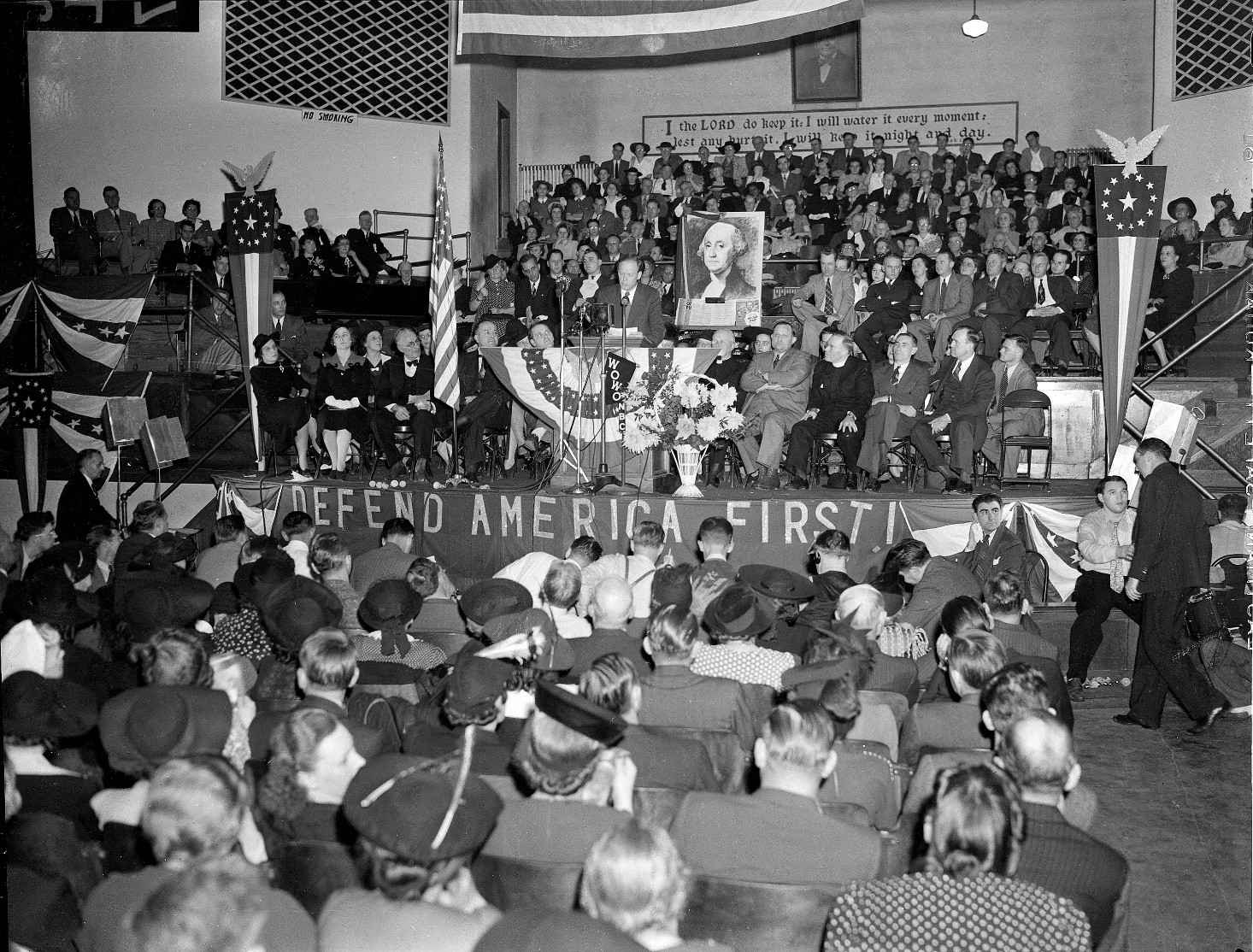
Similarly, in the years leading up to World War II, a powerful “America First” movement arose, urging the nation to resist involvement in yet another foreign conflict. Influential voices, including Charles Lindbergh, argued that the United States faced no direct threat and should not be drawn into Europe’s struggles.
The objections were remarkably similar to those we hear today concerning our nation’s war with Iran.
There was concern about the absence of an immediate threat. There was fear of endless war. There were warnings about economic costs and the loss of American lives. Some questioned whether powerful interests were quietly pushing the nation toward conflict. Others insisted diplomacy had not yet run its course.
In both eras, many Americans believed they were exercising wisdom, restraint, and even moral conviction by opposing war.
History, however, has a way of testing such convictions.
In the case of World War I, the United States did not enter the conflict lightly, and the arguments for doing so were quite substantial. Germany’s campaign of unrestricted submarine warfare had already claimed American lives, most notably in the sinking of the Lusitania. American ships were being targeted on the high seas, raising serious questions about national sovereignty and the safety of U.S. citizens.
Then came the Zimmermann Telegram – a secret communication in which Germany proposed a military alliance with Mexico against the United States. If America entered the war, Germany promised to support Mexico in reclaiming lost territories such as Texas, New Mexico, and Arizona. When this message became public, it shocked the nation and underscored the reality that the conflict was no longer distant. It had the potential to reach American soil.
Moreover, many believed the war was not only about national defense, but about the defense of democratic principles themselves. President Wilson ultimately framed the conflict as a moral cause, calling on the nation to help “make the world safe for democracy.”
Whether one fully agrees with that framing or not, it is clear that the case for entering World War I was not built on impulse but on a growing recognition that American interests, security, ideals, and legitimate interests were increasingly at stake.
World War II presents an even clearer picture. The rise of Nazi Germany under Adolf Hitler, combined with the aggressive expansion of imperial Japan, created a threat that could not be ignored indefinitely.
When the Attack on Pearl Harbor came, the argument that America faced no real danger collapsed overnight. What had once seemed like a distant conflict was suddenly revealed as a direct and unavoidable threat.
The lesson here is not that every call to caution is misguided. On the contrary, skepticism about war is often both prudent and necessary. Scripture itself reminds us that “the simple believeth every word: but the prudent man looketh well to his going” (Proverbs 14:15).
But there is an equal danger – one that history repeatedly exposes. It is the danger of failing to recognize a real threat after it is too late.
Not every war is just. Not every intervention is wise. Still, neither is every call for restraint virtuous.
Sometimes the greater error is not in going too soon, but in waiting too long.
This is what makes the current debate over the war in Iran so consequential. The question is not merely whether war is undesirable – it always is. The question is whether the threat posed is of such a nature that refusing to act invites even greater danger.
If a hostile regime is steadily acquiring capabilities that could dramatically increase its power to harm, especially in ways that may soon be irreversible, then delaying action does not preserve peace; it risks allowing a far greater and more dangerous conflict later. A nuclear-armed Iran, for example, could destabilize the Middle East, embolden its aggression and that of its proxies, and trigger a wider regional arms race as neighboring nations seek their own nuclear deterrent. At that point, the threat is no longer contained; it is multiplied. Once such capabilities are fully realized, they are exceedingly difficult, if not impossible, to reverse without catastrophic cost. In that light, inaction is not a neutral choice; it is a decision that may increase the danger over time rather than reduce it.
History provides us with a sober warning: the same arguments used to avoid unnecessary wars have also, at times, put us in danger of acting too late.
As has often been said, those who cannot remember the past are condemned to repeat it. But remembering the past requires more than repeating familiar slogans. It requires real discernment.
It requires asking not only, “What are the risks of war?” but also, “What are the risks of inaction?”
There are moments in life and in nations when waiting for the first blow is not wisdom but a surrender of advantage. In such moments, wisdom demands courage, and a willingness to see the world as it is – not merely as we wish it to be.
For the Christian, it demands something more still: a heart anchored in truth, guided by Scripture, and well aware that peace is not preserved by wishful thinking but by righteousness, justice, and the steadfast defense of what is right.
Picture: Charles Lindbergh speaking at an America First rally, via Wikimedia Commons, licensed under CC BY-SA 4.0.