
When political hatred drowns out the call of the Gospel, the sickness is deeper than politics
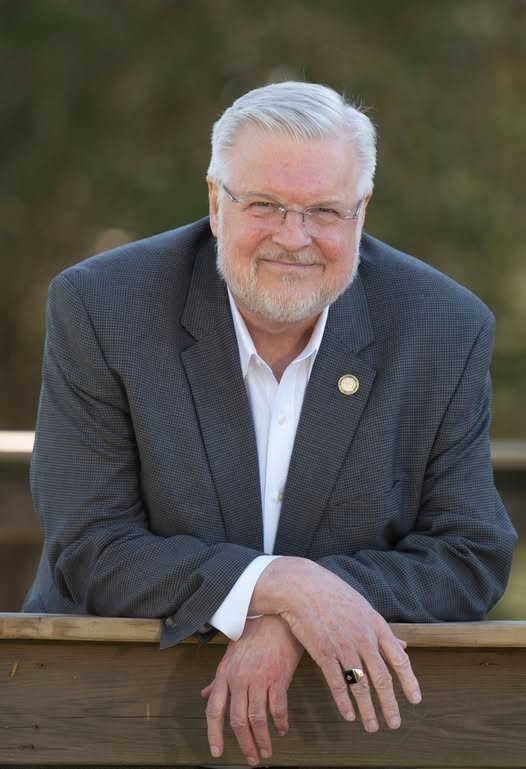
by Rev. Mark Creech
RevMarkCreech.org
A few days ago, I wrote an article titled “When an Assassination Attempt Becomes a Private Summons.” It was not intended as a political defense of President Donald Trump, nor was it meant to compare any earthly leader to Christ. In fact, the point of the article was quite the opposite. It was about the Gospel.
Using Jesus’ words in Luke 13 about the tower in Siloam, I sought to show that moments of tragedy should not merely cause us to ask, “What kind of person would do such a thing?” They should cause us to ask, “Am I ready to meet God?” Public calamity, Jesus taught, should become a private summons to repentance.
The article compared the ruinous choice of a would-be assassin — a man willing to throw away his future in an act of violence — with the even greater tragedy of a soul that tramples underfoot the grace of God. The question was not simply what should happen to the criminal. The greater question was what every sinner would do with Christ.
When the Comments Reveal the Sickness
But then came the comments.
The article drew more than 4,000 responses. However, most didn’t wrestle with repentance, grace, judgment, or the condition of the soul. Instead, a flood of comments insisted that the assassination attempts were fake or staged. Others mocked the danger. Some spoke as though the death of the President would be a cause for celebration. Still others answered by wishing death on Barack Obama or Joe Biden.
In other words, an article meant to call people away from sin and toward Christ became, for so many, another occasion to display the very spiritual sickness the article warned about.
Truth Is Not Partisan Property
The assassination attempts against President Donald Trump were such moments. The July 13, 2024, shooting at Butler, Pennsylvania, was investigated by the FBI as an assassination attempt and potential domestic terrorism. The latter Florida golf-course attempt resulted in Ryan Wesley Routh being convicted and sentenced to life plus 84 months in federal prison for attempting to assassinate Trump, along with related offenses. These are not rumors, partisan talking points, or internet speculations. They are matters of public record.
To deny such facts because they do not fit one’s preferred political narrative is not discernment; it is delusion dressed up as skepticism. Christians should be the last people to handle truth this way. We cannot condemn falsehood when it comes from our opponents while excusing it when it serves our own side. That applies whether someone insists the assassination attempts were staged or whether someone insists the 2020 election was stolen despite the absence of evidence sufficient to prove that claim. Truth is not partisan property. It belongs to God.
When Politics Becomes Idolatry
There are moments in national life when the event itself is alarming enough, but the public reaction to it is even more revealing. What is taking place is not merely political disagreement. It is moral decay.
America has always had fierce political divisions. The founders themselves argued bitterly. Newspapers in the early republic could be vicious. But there is a line that must never be crossed: the belief that political opponents should be killed, or that attempted murder is acceptable when the target is sufficiently hated.
When citizens begin to think that way, no matter their political leanings, politics has become idolatry. The party, the movement, or the personality has taken the place of God. The opponent is no longer a neighbor to be persuaded but an enemy to be destroyed.
Affective Polarization and the Human Heart
One commentator on my post used the phrase “affective polarization.” It is worth considering. In plain terms, people are not only disagreeing about taxes, immigration, abortion, crime, foreign policy, or the direction of the country. They are learning to despise each other.
But Christians must go even deeper than political science. Affective polarization may describe the social phenomenon, but Scripture diagnoses the heart. When hatred becomes stronger than truth, stronger than mercy, stronger than reverence for life, and stronger than the fear of God, the soul is in grave danger.
Such hatred is corrosive. It makes conspiracy theories easier to believe. It makes cruelty feel righteous. It makes violence seem excusable. It blinds people to the image of God in those with whom they disagree.
The Christian Response to Political Hatred
Christians, especially, must reject this spirit without qualification. Scripture does not permit us to hate our enemies into the grave. Our Lord said, “Love your enemies” (Matthew 5:44). That command is not just a sweet sentiment. It is one of the hardest teachings of Jesus, and one of the clearest signs that Christian conviction is different from partisan rage.
This does not mean we must be politically timid. Christians may and should speak plainly about moral evil, unjust policies, corrupt leadership, threats to liberty, and the direction of the nation. There is nothing virtuous about pretending that egregious matters of public policy are minor concerns. But God help us never to confuse moral conviction with bloodlust.
We should also be honest enough to condemn political violence, no matter whose life is threatened. It is wrong to wish death on President Donald Trump. It is wrong to wish death on former Presidents Barack Obama and Joe Biden. If murder is wrong when it threatens those we support, it is just as wrong when it threatens our opponents.
After the Butler shooting, President Biden said “everybody must condemn” the attack. That was the right instinct. Political violence should not require a partisan calculation before we denounce it.

What Kind of People Are We Becoming?
The greater question is, what kind of people are we becoming? Are we citizens capable of self-government, or tribes addicted to contempt? Are we neighbors under God, fellow Americans, or combatants in a cold civil war of the soul?
The answer will not be found only in Washington. It will be found in churches, homes, schools, pulpits, newsrooms, and Facebook comment threads. Every cruel joke, every dehumanizing slur, every conspiracy shared without evidence, every fantasy of political death contributes to this sickness among us.
A republic cannot survive if its people lose the capacity for moral restraint. No church, conservative or progressive, serves well if it baptizes partisan hatreds. A nation cannot heal when a large swath of its citizens secretly hopes their enemies will die.
We need conviction, not cruelty. Courage, not vengeance. Truth, not conspiracy. Justice, not assassination.
The attempt to murder a president or presidential candidate is not only an attack on one man. It is an attack on our constitutional order, the rule of law, and the principle that ballots — not bullets — decide our public life.
The Gospel’s Final Word
But the Gospel of Christ presses the matter even further. It does not permit us to stand above the assassin, the angry commenter, or the political enemy as though sin belongs only to them. Jesus says, “Except ye repent, ye shall all likewise perish” (Luke 13:3, 5).
The comments beneath my article on social media revealed something painful. Americans are no longer merely disagreeing with one another. They are despising one another. Some have reached the point where death itself sounds preferable to political defeat.
This is not patriotism. This is not justice. This is not Christianity.
The answer is not to trade one death wish for another. The answer is repentance. The answer is truth. The answer is the grace of God in Jesus Christ.
A public tragedy became a private summons. Sadly, the public reaction became one more proof the summons is urgently needed.
Christians should be the first to say so.