by Dr. Mark Creech
Director of Government Relations
Return America
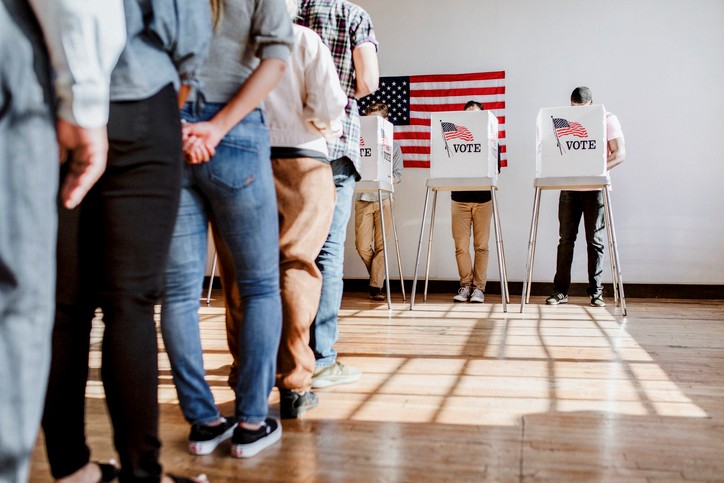
Primary elections rarely make headlines outside political circles. Yet the results of North Carolina’s recent primaries offer a revealing window into the direction of the state’s political culture and a sobering reminder of why elections increasingly matter for voters motivated by faith and moral conviction.
What happened in North Carolina reflects a broader national trend: the cultural and moral divisions shaping American politics are becoming sharper, and primary elections are increasingly where those conflicts are decided.
The N.C. Race for the U.S. Senate
In North Carolina’s race for the U.S. Senate, former Governor Roy Cooper secured the Democratic nomination with an overwhelming majority of the vote (92%). Republicans selected Michael Whatley as their nominee (64.6%), avoiding a bruising primary and setting up what will likely become one of the most closely watched Senate races in the country.
Republican Primary Results
Meanwhile, in Raleigh, one of North Carolina’s most powerful political figures faces an uncertain future. Long-time Republican Senate leader Phil Berger currently trails challenger Sam Page by only two votes in Rockingham and Guilford counties combined. Military ballots, provisional votes, and possible recounts will determine the final outcome. Should Berger ultimately lose, it could trigger a leadership struggle in the Senate and fundamentally reshape the state’s legislative power dynamics.
Most Republican incumbents — both at the state and federal levels — successfully secured their party’s nominations and will advance to the November general election. In the North Carolina General Assembly, the overwhelming majority of GOP legislators reclaimed their nominations, though a handful of incumbents were defeated. Among them were Rep. Kelly Hastings of Gaston County, who lost to Caroline Eason by 54%-46%, and Rep. Keith Kidwell of Beaufort County, who was narrowly defeated by Darren Armstrong, 52%-48%. Other upsets included Rep. Reece Pyrtle, of Rockingham County, who lost to attorney Seth Woodall (57%-43%); Sen. Chris Measmer of Cabarrus County, who was defeated by former Rep. Kevin Crutchfield (57%-43%); and Rep. Mark Pless of Haywood County, who lost to Jimmy Rogers (54%-46%). At the federal level, however, Republican voters returned their incumbent members of Congress to the ballot.
Democratic Primary Results
On the Democratic side, most Democratic incumbents at both the federal and state levels successfully secured renomination and will return to the ballot in November. In North Carolina’s congressional races, sitting Democratic members of the U.S. House avoided serious primary opposition and advanced comfortably. Likewise, in the North Carolina General Assembly, Democratic incumbents overwhelmingly held their seats in the primaries, with only three contested races producing changes.
Why Three Democratic Incumbents Were Defeated
The most revealing development from the primaries may be the loss of three Democratic incumbents in the North Carolina House. Their defeats reveal the nature and direction of the Democratic party in North Carolina and serve as a warning to conservative Christian voters. These lawmakers drew fierce primary opposition.
In the North Carolina Senate, Republicans already hold a veto-proof supermajority, allowing them to override the governor’s veto without Democratic support. The situation is different in the House of Representatives, where Republicans remain one seat short of a supermajority. As a result, Democratic votes are still required to override any veto issued by Governor Josh Stein. When even a small number of Democrats cross party lines, their votes can determine whether legislation becomes law or dies with the governor’s veto.
Representatives Shelly Willingham of Edgecombe County, Carla Cunningham of Mecklenburg County, and Nasif Majeed of Mecklenburg County are Democrats who supported veto overrides of controversial legislation and were subsequently defeated by challengers within their own party.
Rep. Shelly Willingham was defeated by Patricia Smith, who won about 56% of the vote to Willingham’s 44%, while Rep. Nasif Majeed and Rep. Carla Cunningham suffered huge lopsided defeats, losing to Veleria Levy (69%–26%) and the Rev. Rodney Sadler (70%–22%), respectively.
The legislative initiatives that placed these lawmakers in political jeopardy involved issues that conservative Christians, parents, and law-and-order voters across the state consider deeply important. In supporting those measures, they ultimately paid a significant political price with members of their own party.
The Legislative Battles Behind the Primaries
One of the most notable examples was HB 193 – Firearm Law Revisions, legislation allowing trained staff or volunteers at private schools to carry concealed weapons on campus with the permission of school administrators. For many small schools with limited security resources, the measure was seen as a practical way to protect their students’ lives.
The legislation did not appear overnight. Return America worked for more than a decade advocating for reforms that would allow schools greater flexibility in protecting their students. After twelve years of effort, HB 193 finally passed the General Assembly, only to be vetoed by the governor.
When the House voted to override the veto, the outcome was expected to be razor close. Representative Shelly Willingham’s vote proved decisive, allowing the override to succeed and the bill to become law. Without that vote, the legislation would have failed.
Another major flashpoint involved HB 805 – Prevent Sexual Exploitation/Women and Minors. The bill originally began as a bipartisan effort to establish consent requirements for pornographic websites. But amendments added by the Senate significantly expanded the measure.
Among other provisions, the legislation defined biological sex in state law, created avenues for lawsuits related to gender-transition procedures, and required schools to provide parents with lists of library materials while allowing them to restrict their children’s access to sexually graphic content.
Governor Stein vetoed the bill, but the legislature ultimately overrode the veto. Representative Nasif Majeed’s lone vote proved decisive in the House override.
Education policy also became a flashpoint through SB 254 – Charter School Changes, which shifted certain oversight responsibilities from the State Board of Education to the Charter School Review Board. Supporters argued the change would strengthen charter school autonomy and responsiveness to parents.
The override succeeded with the help of several Democratic votes, including those cast by Representatives Cecil Brockman, Carla Cunningham, and Shelly Willingham. Brockman later resigned from office amid allegations involving sex crimes against a minor, but during the legislative debate, his vote helped make the override possible.
Finally, Immigration policy proved to be a major dividing line. HB 318 – The Criminal Illegal Alien Enforcement Act expanded a previous law requiring local sheriffs to cooperate with federal Immigration and Customs Enforcement detainers. The legislation strengthened cooperation between local law enforcement and federal immigration authorities – an issue that remains highly important to many conservative voters concerned about border security and public safety.
When the bill passed the House, Representative Carla Cunningham was the lone Democrat to vote in favor of it.
NC Democratic Party Moving Further Left
Taken together, these legislative battles help explain why several Democratic incumbents suddenly found themselves facing intense primary opposition. Their willingness to cross party lines on issues involving parental rights, sexual ethics, school governance, school safety, and immigration placed them outside the ideological boundaries increasingly enforced within the North Carolina Democratic Party.
For conservative Christian voters, the larger lesson is unmistakable.
The Democratic Party in the Tar Heel State is definitely moving toward greater ideological uniformity, particularly on cultural and moral questions. In other words, the North Carolina Democratic Party has so decisively moved to the political left that there is no room for members who dissent.
In earlier decades, Southern Democratic coalitions often included lawmakers who reflected the traditional religious convictions of their communities. At one point, it might have been said that this space was shrinking; today, it is tragically gone.
Today, legislative outcomes are increasingly determined not by bipartisan negotiations and compromise after the election, but by the election itself. The reason is clear: many of the issues now shaping public policy involve fundamentally different moral visions – questions of right and wrong, good and evil, light and darkness – with little or no common ground. That reality places a greater responsibility on voters, especially those whose political engagement is shaped by moral and biblical conviction.
Christians rightly place their ultimate hope not in politics but in the kingdom of God. Yet Scripture also recognizes the importance of civil authority and the consequences of public leadership. The apostle Paul wrote that governing authorities are intended to be “the minister of God…for good” (Romans 13:4).
When policies affecting families, children, and religious liberty are debated in the public square, believers must recognize that these issues are not merely political – they are deeply moral.
This year’s North Carolina primaries serve as a reminder that the cultural debates shaping our society are not fading. If anything, they are intensifying, and the outcomes of elections increasingly determine how those debates are resolved into public policy.
What This Means for Christian Voters
For conservative Christians, the message of this election season is clear: remain informed, remain engaged, and remember that faithful Christian citizenship is one way believers can seek the welfare of the communities in which God has sovereignly placed them. In doing so, Christians also practice the command Christ gave when He said, “Thou shalt love thy neighbour as thyself” (Matthew 22:39). Caring about the moral direction of public life and the well-being of our communities is not merely a political concern; it is one expression of loving our neighbors in the way our Lord instructed.
The Scriptures likewise remind believers that the good of the community should matter to them. As the prophet Jeremiah urged God’s people living in exile, “seek the peace of the city…for in the peace thereof shall ye have peace” (Jeremiah 29:7). In every generation, Christians are called to pursue the good of the society in which they live, trusting that faithful engagement in the public square can help promote justice, stability, and the common good.